
Last updated November 24, 2026
 Sweep & inspection
 Caps & crowns
 Flue relining
 Masonry repair
 Gas fireplace service
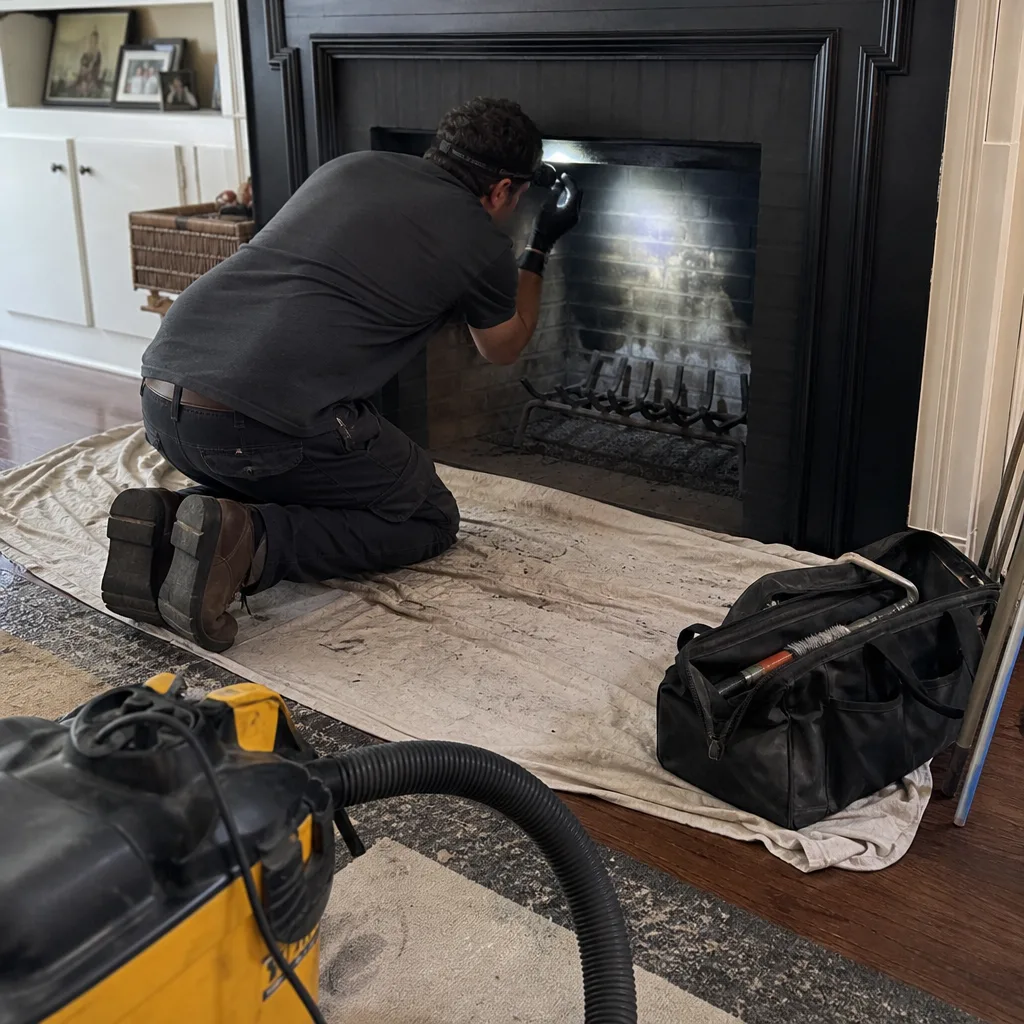
Level 1 sweep and inspection to the NFPA 211 annual standard - flue, crown, cap, and flashing checked and photographed
Chimney sweep logs do not sweep chimneys. They loosen some creosote - which then falls where a brush and vacuum still have to collect it.
Chimney Cleaning Warning Signs: A Midtown Homeowner’s Reference Guide
Smoke backing into your living room isn’t one problem. It’s six possible problems with completely different fixes, and the same holds for that acrid smell you noticed in October or the stain spreading across the ceiling above the firebox. Most homeowners treat chimney warning signs as a single alarm bell: something’s wrong, better call someone. In our experience, the signs you notice point to specific components, and knowing which component is failing changes what you ask for, what you agree to, and what you pay. This guide maps the symptoms Midtown homeowners actually report to the parts of the system that cause them. You’ll learn what to photograph before an appointment, which signs mean stop using the fireplace now, and which ones can wait for your next service.
Quick Answer
Chimney warning signs fall into two groups: signs that mean stop using the fireplace immediately (smoke rolling back into the room, a strong creosote smell that returns after a sweep, visible cracks in the flue or smoke chamber, staining that grows after rain) and signs that need attention at your next scheduled service (a stiff damper, minor rust on the firebox, a loose cap). Matching each symptom to a component – flue, liner, smoke chamber, damper, crown, or flashing – tells you whether you need a sweep, a repair, or a restoration, and how urgently.
Styles & brands we work with
- Sweep & inspection
- Caps & crowns
- Flue relining
- Masonry repair
- Gas fireplace service
Table of Contents
- Why warning signs are diagnostic, not just alarming
- Signs that mean stop using the fireplace now
- Warning signs organized by chimney component
- Distinguishing creosote odor, moisture odor, and animal debris odor
- What to photograph before your appointment
- What not to do when you notice a warning sign
- Midtown-specific factors that shape what you’ll see
- How to decide between a sweep, a repair, and a restoration
Why Warning Signs Are Diagnostic, Not Just Alarming
A chimney isn’t a pipe. It’s a system with distinct parts, each doing a specific job: the firebox contains the fire, the damper controls airflow, the smoke chamber funnels exhaust upward, the flue carries it out, the liner protects the surrounding structure from heat transfer, the crown and flashing keep water out of the masonry, and the cap keeps animals and rain from entering at the top. When a homeowner calls us about a symptom, the first question we ask is which part of that chain the symptom lives in.
This matters because the same visible problem can have very different causes. Water staining on a ceiling near the chimney could come from a failed crown at the top, failed flashing where the chimney meets the roof, or condensation inside a flue that’s oversized for the appliance. Each has a different fix, and guessing wrong means paying for the wrong repair. Our approach with Midtown homeowners is the same every time: we inspect first, document what we find, and recommend based on what the camera and the structure actually show. Nothing is suggested before we can show you the evidence for it.
Treating signs as a diagnostic framework also means you don’t panic over a cosmetic issue and don’t ignore a structural one. Not every creosote flake on the firebox floor is a crisis. Not every crack in the crown needs a full rebuild. The goal is to sort what you see into three buckets: stop now, fix soon, and note for next service.
Signs That Mean Stop Using the Fireplace Now
Some warning signs require you to stop using the firebox before you call anyone. These are the ones tied to fire risk, carbon monoxide, or structural failure in the flue. We never tell a homeowner to diagnose these themselves, but we do want you to recognize them and stop firing the chimney.
The signs that mean stop using the fireplace and call for an inspection before lighting another fire:
- Smoke rolling into the room with no obvious cause, especially when the fire was drafting fine before.
- A strong, persistent creosote smell that comes back within days of a sweep, which can indicate heavy deposit buildup or a fire that has already started in the flue.
- Visible cracks in the smoke chamber or firebox walls that a flashlight reveals inside the firebox.
- Chunks of masonry or dark debris on the roof or at the base of the chimney – a sign of spalling or a liner problem.
- Staining that gets worse after rain, indicating an active water path into the chimney.
- Any damage to the flue visible from the top, including a flaking, crumbling, or missing lining.
A carbon monoxide detector that alarms when the fireplace is running is not a “check it later” sign. Turn off the appliance, ventilate the room, and call for an inspection. Carbon monoxide is colorless and has no smell; the detector is often the only warning you get before symptoms start. This is one signal where waiting is never worth the risk.
Warning Signs Organized by Chimney Component
The fastest way to understand what your chimney is telling you is to map the symptom to the component. We walk Midtown homeowners through this mapping because it helps them describe a problem accurately and helps us know what to look for first when we arrive.
Flue and liner symptoms
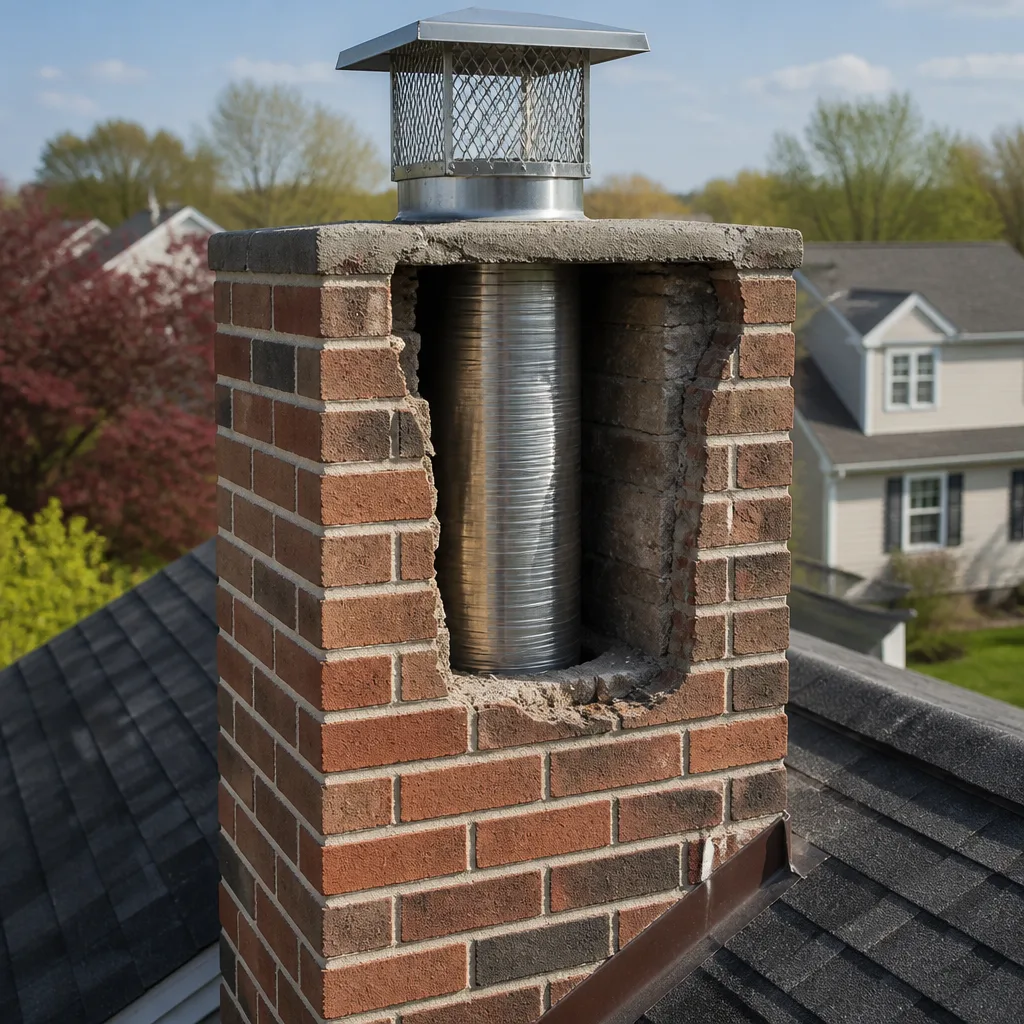
The flue is the vertical passage, and the liner is the material that protects the surrounding masonry or framing from heat. Warning signs in this part of the system include smoke that doesn’t clear, a persistent smell inside the house after the fire is out, visible cracks in a clay tile liner (seen with a camera), a crumbling or dislodged liner tile, or a flue that’s visibly damaged from the roof. These can indicate anything from heavy creosote buildup to a breach that needs relining or, where the flue qualifies, a ceramic resurfacing with HeatShield.
Smoke chamber symptoms
A rough or improperly shaped smoke chamber causes turbulence, and turbulence means smoke that lingers or spills. Signs that point here include smoke that rolls out the top of the firebox opening, a draft that only fails when the fire burns low, or a sour smell that comes back even after a sweep. Insulation and resurfacing of the smoke chamber is a different repair from a sweep, and the diagnosis has to come from camera inspection.
Damper symptoms
The damper is the metal flap above the firebox. A stiff, stuck, or rusted damper is one of the most common signs we see in Midtown homes with fireplaces that have sat unused for a season. It’s also one of the easiest to mistake for a “chimney problem” when it’s really a damper problem. A damper that won’t close completely is also a source of heat loss and bugs when the fireplace is idle.
Crown symptoms
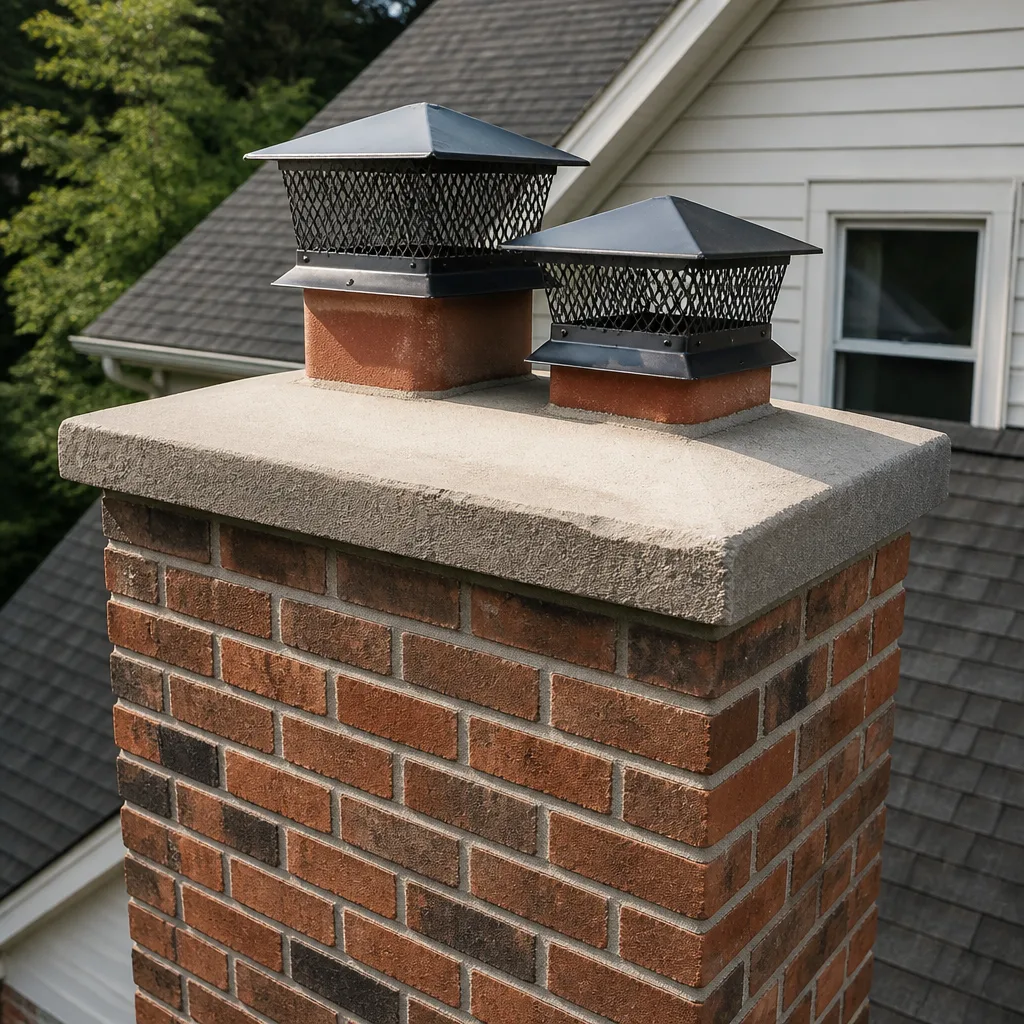
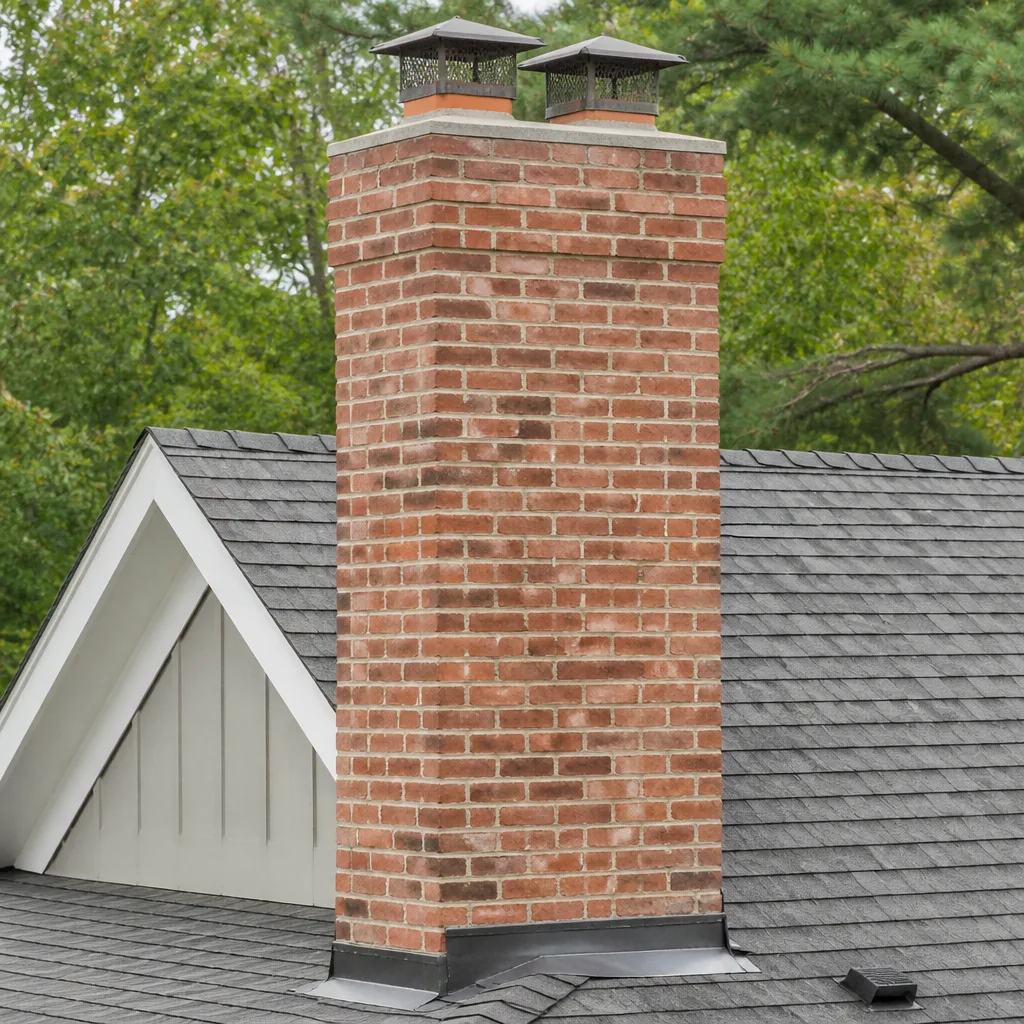
The crown is the sloping concrete or masonry cap at the top of the chimney. Cracks in the crown, a crown that’s pulled away from the flue, or a crown with no overhang at all are all signs that water is getting in from above. This is where a purpose-built Gelco or Famco replacement crown makes a real difference, because a properly sloped crown with the right overhang sheds water instead of funneling it into the masonry.
Flashing symptoms
Flashing is the metal that seals the joint where the chimney meets the roof. Rusted, lifted, or missing flashing is a water entry point. The telltale sign is rust-red staining on the chimney exterior or roof deck near the joint, or a stain on the interior ceiling directly beside the chimney. Flashing failures and crown failures look similar from inside a house; they’re diagnosed differently from the roof.
Distinguishing Creosote Odor, Moisture Odor, and Animal Debris Odor
Smell is the most misinterpreted chimney warning sign. Homeowners describe “a chimney smell,” but there are three distinct odors, and each points to a different cause. Learning to tell them apart before you call anyone makes the appointment more productive and, sometimes, saves you a visit you didn’t need.
- Creosote odor is sharp, tarry, and smoky – like a cold firebox that hasn’t aired out. It’s strongest on warm, humid days and just before rain. It comes from creosote deposits inside the flue emitting vapor. A normal amount of creosote produces only a faint smell right after a fire season. A strong, persistent creosote smell deserves a sweep and inspection, and a smell that returns within a week of a sweep is a reason to have the flue camera-inspected.
- Moisture odor is musty, damp, and earthy – closer to a basement smell than a smoke smell. It usually gets worse after rain and smells stronger near the chimney breast, especially in the weeks after a storm. This points to water getting in through the crown, the flashing, or a degraded cap. The fix is roof-level and masonry-level, not a sweep.
- Animal debris odor is pungent, sour, and often accompanied by scratching or chirping at dawn. It means a bird, squirrel, or raccoon has gotten into the flue or is nesting on top of it. A missing or damaged cap is almost always the cause. The fix is a proper cap and a cleaning to clear nesting material and droppings, which can otherwise become a fire hazard and an air quality problem inside the home.
If you can’t tell which odor you’re smelling, that’s a useful thing to say to whoever comes out. Describe when it’s worst (after rain, before a storm, at dawn) and where it’s strongest (which room, which wall). That single detail often points a trained technician straight to the right part of the system.
What to Photograph Before Your Appointment
You don’t need to diagnose your chimney. You do need to photograph what you can see, because a photo taken from a safe position helps whoever inspects the chimney understand the problem before they arrive. We ask Midtown homeowners to gather these images when they can do so safely and without climbing on the roof or reaching into the firebox:
- Inside the firebox – a well-lit photo of each wall, the floor, and the damper, taken from outside the opening. Look for cracks, spalling, rust, or unusual staining.
- The damper in both positions – open and closed, so a technician can see how it’s seating.
- The chimney breast and surround – any staining, discoloration, or cracking visible on the wall near the fireplace.
- The ceiling above and beside the chimney – any brownish water staining, especially after a rainstorm.
- The exterior of the chimney from the ground – the whole stack, the crown, and the cap. From the ground is enough. Never climb onto the roof to take a photo.
- The roofline where the chimney meets the shingles – if it’s visible from the ground, photograph the flashing joint.
- Any debris you find – a small amount of crumbs or flakes on the firebox floor is normal; a larger quantity is worth photographing so the technician can see it.
Your photos won’t replace a camera inspection, but they help prioritize. When you call, the technician can tell you whether a sweep is likely, whether a camera inspection should be scheduled at the same time, and whether the signs you’ve photographed suggest the job belongs to a different specialist. Every job we take on begins with an inspection, so documented findings, not guesswork, drive the recommendation.
What Not to Do When You Notice a Warning Sign
Some of the most expensive chimney repairs we see start with a homeowner trying to help. Here are the responses that make diagnosis harder or the problem worse:
- Don’t keep burning in the fireplace to “see if it clears up.” A chimney that’s already showing signs of poor draft or creosote buildup is one fire away from a hazard. If you’re seeing signs that mean stop, stop.
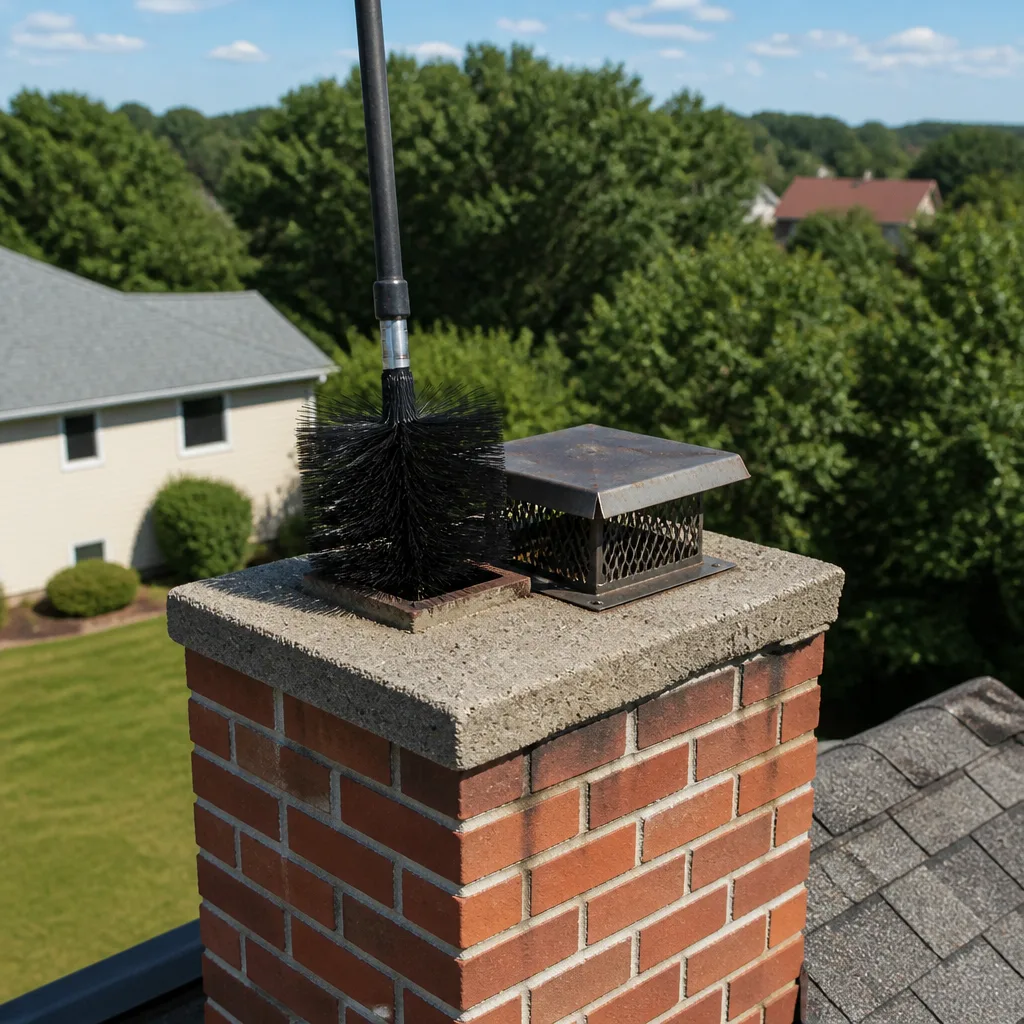
- Don’t try to sweep the flue yourself with a brush on a pole. A homeowner brushing a clay-flue chimney can damage liner tiles, and the brush doesn’t reach the smoke chamber or the deposits that matter most. It also hides the evidence a trained sweep needs to see.
- Don’t seal the fireplace opening to “keep the smell out.” Sealing a fireplace with an active moisture or flue problem traps the problem and can force water into the surrounding masonry, spreading damage into the wall structure.
- Don’t patch a crown or flashing with caulk or roof cement. A temporary patch on a failed crown or flashing hides the failure point and usually pushes water farther into the masonry, where it does more damage before it’s discovered.
- Don’t close the damper and try to solve the smell with air fresheners. Odor masking makes the appointment less useful, since the technician needs to smell what you smelled.
- Don’t hire based on a phone quote alone. Chimney work is priced per job, and quotes given without inspection turn into surprises on the day of the work. Ask for a written estimate based on what the technician finds.
- Don’t delay a camera inspection because a “quick sweep” was offered. If the flue shows damage or a stain is growing, only a camera inspection can confirm whether the liner needs repair or resurfacing.
Midtown-Specific Factors That Shape What You’ll See
Midtown’s housing stock matters for chimney diagnosis. Many Midtown homes were built decades ago with fireplaces that see intermittent use, and that pattern shapes the problems we see. A fireplace that runs every evening in winter builds deposits steadily; a fireplace that sits idle for two seasons and then gets a heavy burn weekend builds creosote in a different pattern. Both are diagnosable, and both need a sweep on a schedule matched to use, not a calendar date.
Midtown’s humid summers and temperature swings between seasons are also a real factor. Warm, humid weather pushes creosote odor into the house, which is why a smell that wasn’t obvious in January can be strong in June. Storm-driven rain finds failing crowns and flashing, so staining after a heavy rain isn’t a coincidence. The clay liners common in older Midtown construction also crack and spall over time, which is why camera inspection is so valuable here. Where a flue qualifies, a ceramic resurfacing with HeatShield restores the flue without a full reline, and where the flue geometry is complex, we use DuraFlex flexible liner systems to reline to the right standard. We source caps and crowns through Gelco and Olympia Chimney for Midtown jobs, because purpose-built parts addressed to the moisture path matter more than improvised repairs.
If you’re unsure where to start, you don’t have to sort it out alone. A chimney sweep on a scheduled visit includes an inspection that tells you exactly what’s happening inside the flue, the smoke chamber, and the top of the chimney. From there, our team can handle a chimney cap & crown replacement, a liner restoration, or a fireplace repair as needed – the same technician looking at the whole system, not one part of it. If you’d like to see what our team does beyond a sweep, the full scope is on our Chimney Sweep Midtown page.
How to Decide Between a Sweep, a Repair, and a Restoration
Three questions sort your warning signs into the right next step. Answer them honestly before you call, and the conversation will go faster.
- Is the fireplace safe to use right now? If you’re seeing smoke rolling into the room, a persistent creosote smell, cracked smoke chamber walls, or signs of active water entry, the answer is no. Stop using it and schedule an inspection. Every job we take on starts with an inspection anyway, so this is the right first step regardless of cause.
- Is the problem visible and repeatable, or did it happen once? A single smoke puff on a cold, damp day is often a cold-flue issue that resolves with a proper warm-up. Signs that repeat – the stain that comes back after every rain, the smell that returns every spring – point to a real defect and need a camera inspection.
- Is the issue water coming in, or exhaust going out? Water signs (stains, rust streaks, musty odor after rain) point to the crown, flashing, or cap. Exhaust signs (smoke, creosote smell, poor draft) point to the flue, liner, smoke chamber, or damper. These are different jobs. Knowing which category your signs fall into tells you what to ask for.
Once a technician inspects, the recommendation should be specific and written. A sweep clears deposits. A repair fixes a part – a damper, a cap, a crown, flashing. A restoration rebuilds or relines a component that’s failed or degraded, sometimes through a flue resurfacing. Our promise to Midtown homeowners is that we document what we find before we recommend anything, and we tell you plainly when a repair can wait. A written estimate sets the final price, per job.
Common Mistakes to Avoid
- Treating every sign as a full chimney rebuild. Most symptoms map to a single component, and a repair to that component is usually the right answer. Ask for the diagnosis in writing before you approve work.
- Assuming a sweep will fix the smell. A sweep clears deposits, but a smell that returns within days of a sweep points to something a brush can’t reach – a damaged smoke chamber, an oversized flue, or an active water path. Insist on a camera look.
- Ignoring a stiff damper because “the fire still burns.” A damper that won’t close fully is a heat-loss and animal-entry problem in the off-season, and it’s inexpensive to address compared with the damage a loose cap or open flue can cause.
- Waiting until the first cold snap to book. A fireplace that hasn’t been looked at since last season usually needs more than a same-day brush. Book an inspection before the season starts so there’s time to address what it finds.
- Skipping the roof-level inspection because the firebox looks fine. Crown and flashing failures are visible from above, not from the living room. A camera in the flue and eyes on the crown are both necessary for a full picture.
- Approving a repair without a written estimate. A written estimate sets the final price, per job, and it means the technician has to be specific about what they’re fixing and why.
- Hiring a sweep for a moisture problem. Water entry is a masonry and roofing problem, not a sweeping problem. If your signs point to the crown, flashing, or cap, ask for that work specifically.
See the difference
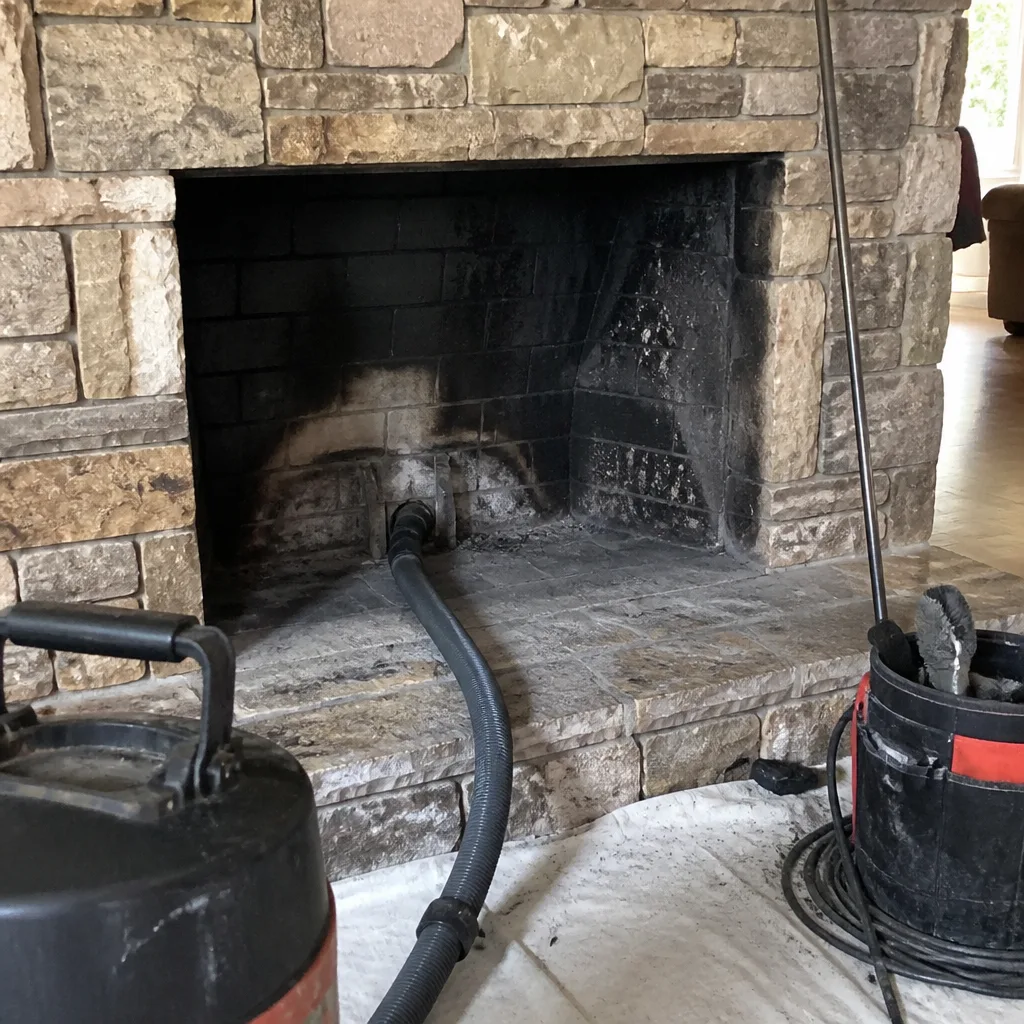 Before
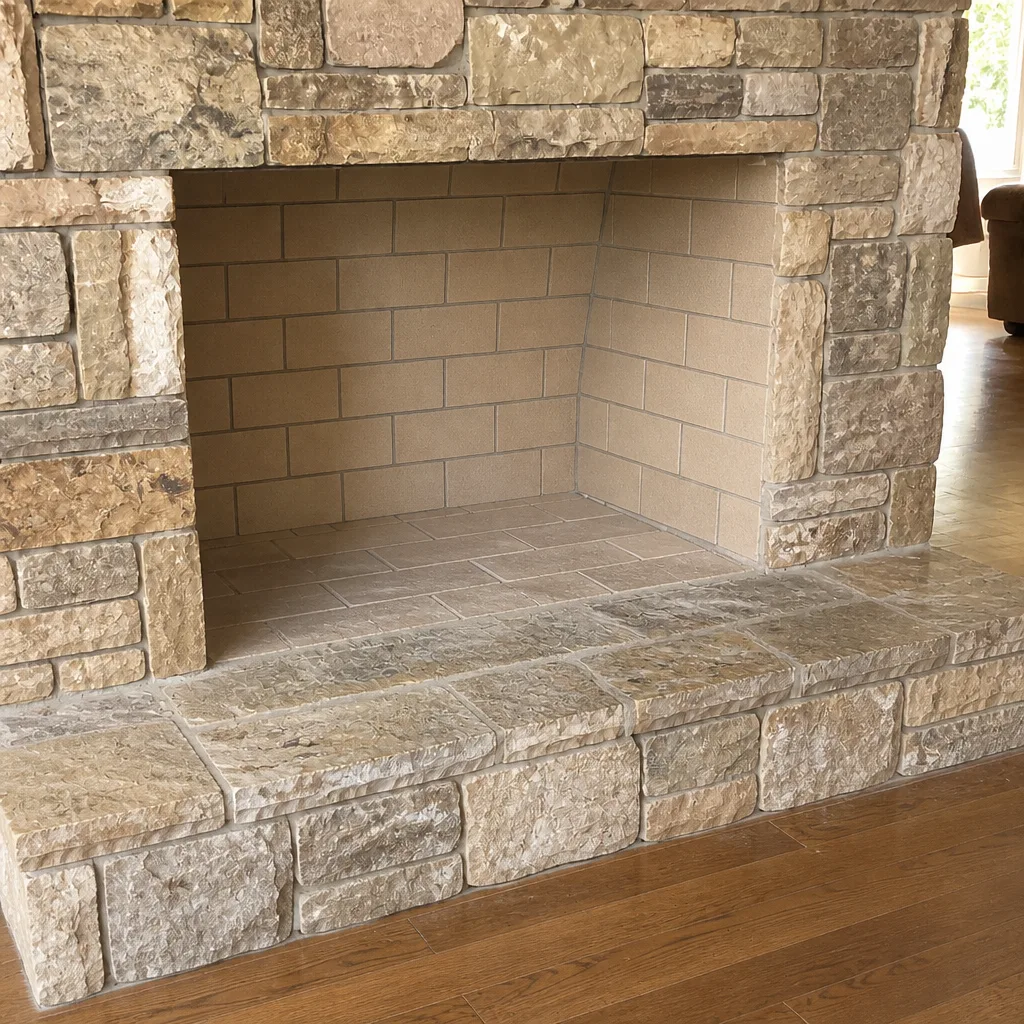 After
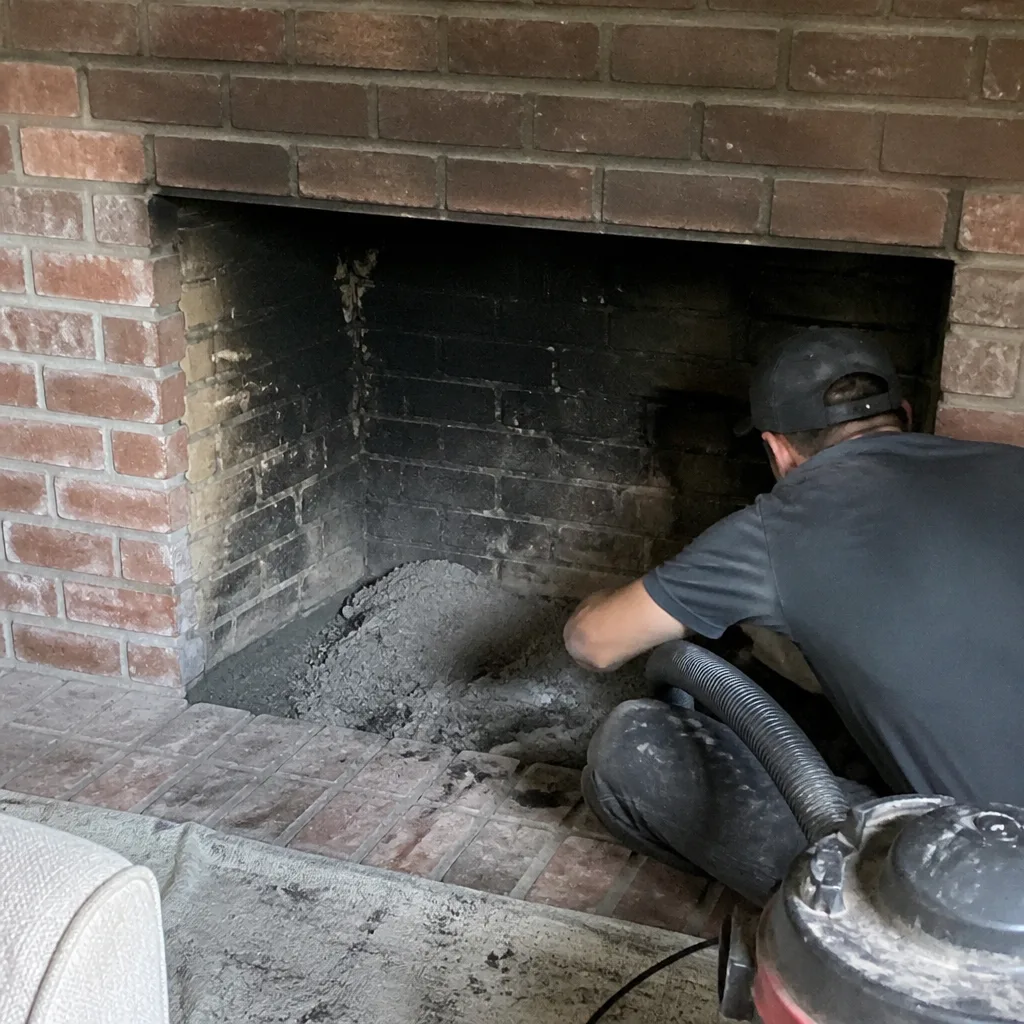 Before
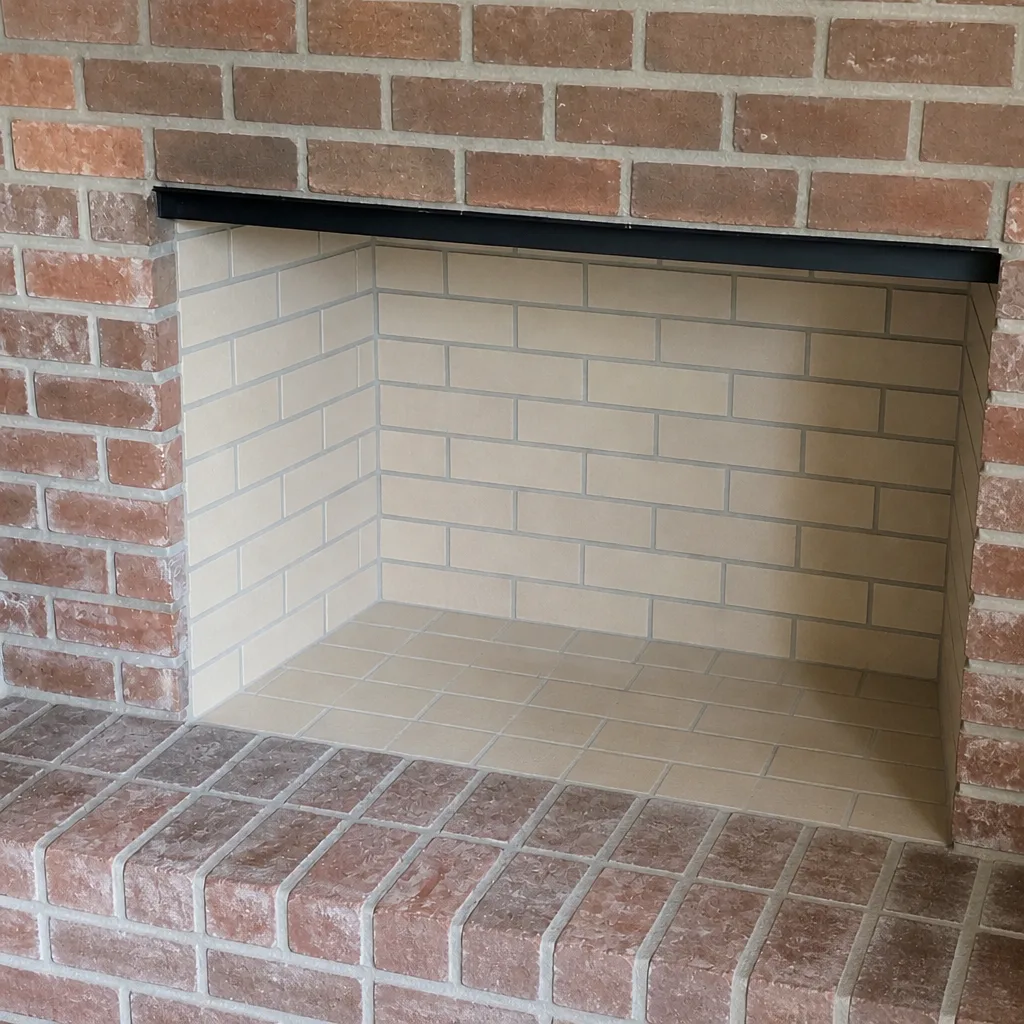 After
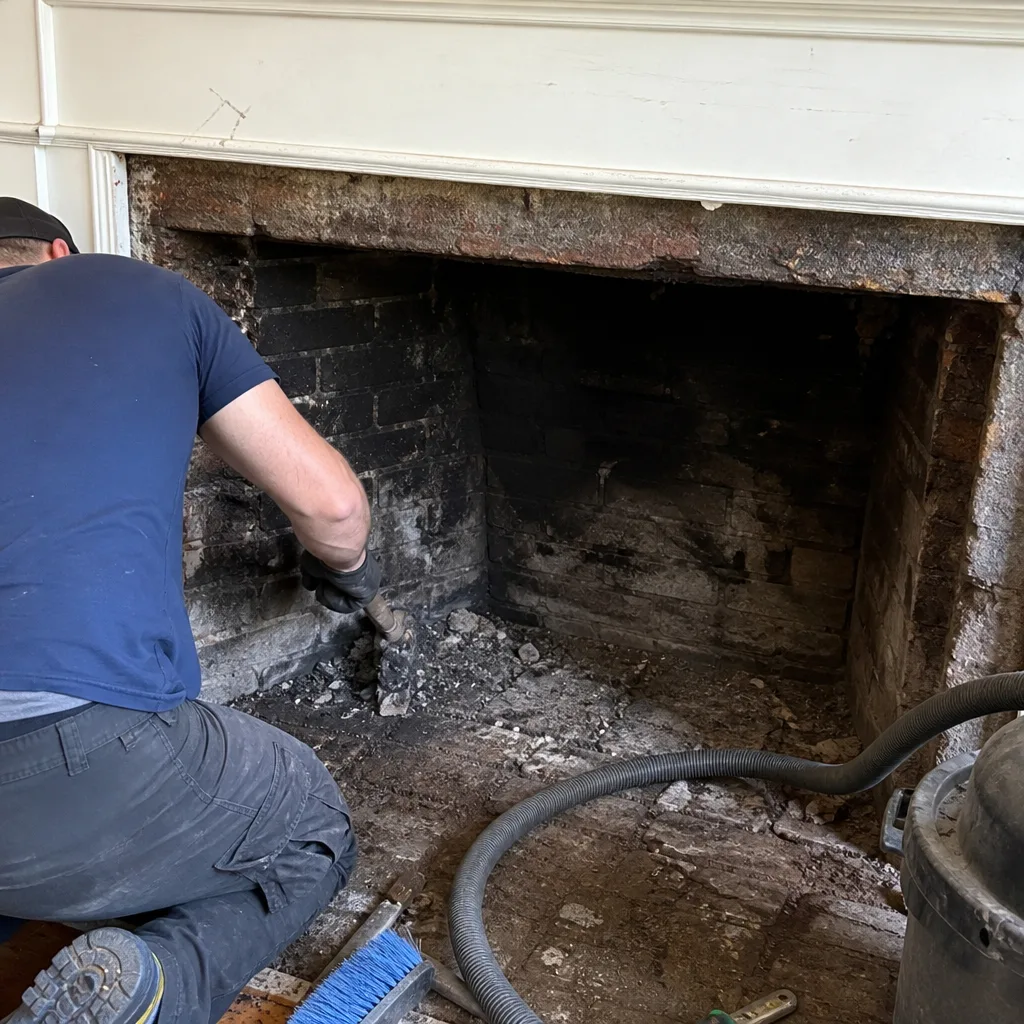 Before
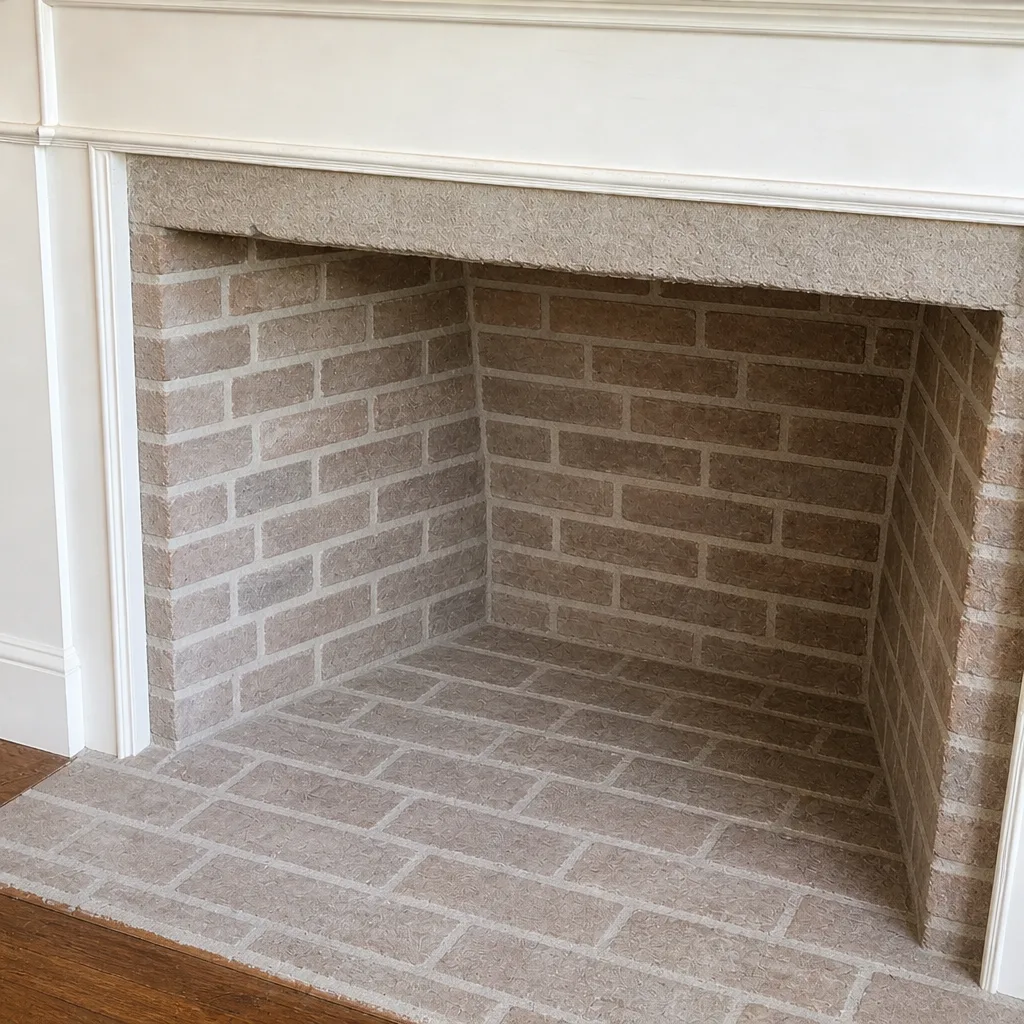 After
When to Call a Professional
Call a professional if any of these describe your situation: smoke backs into the room, the carbon monoxide detector has alarmed, you see cracks or crumbling material in the firebox or flue, water staining grows after rain, a strong creosote smell returns after a sweep, or an animal is living in the flue. Call if your damper is stuck, if the cap is missing or damaged, or if the crown has visible cracks. And call if you’ve never had the flue inspected and you use the fireplace regularly – a camera inspection is the only way to know what’s happening inside. Our technicians have up to 14 years of experience, and we begin every job with an inspection so the recommendation is based on documented findings. Chimney Sweep Midtown offers free estimates in Midtown – call (877) 820-8520. We answer 24/7. Fast dispatch from 7am to 7pm, Sunday through Friday.
Frequently Asked Questions
The most common is a persistent odor in the house, usually a creosote smell that’s strongest on humid days or just before rain. Second is smoke backing into the room, which is usually a draft, smoke chamber, or damper issue. Both signs point to a component that can be inspected and, in most cases, repaired without a full rebuild. Call (877) 820-8520 for an exact quote – estimates are free.
Stop using the fireplace if you see smoke rolling into the room, cracked smoke chamber walls, heavy debris at the base, staining that grows after rain, or any damage visible at the top of the flue. A carbon monoxide detector alarm also means stop. Signs like a stiff damper, a minor crown crack, or a loose cap can wait for your next scheduled service, but should still be addressed. When in doubt, stop and call (877) 820-8520.
Creosote smell is sharp, tarry, and smoky. Moisture smell is musty and earthy, like a basement. Creosote smell gets stronger in warm, humid weather and just before rain. Moisture smell gets stronger after rain and is often centered on the chimney breast or the ceiling above the fireplace. If you can’t tell which one you have, describe the timing and location to the technician – that detail helps point straight to the cause.
Yes, and we encourage it. The most useful photos are the inside of the firebox (in good light), the damper open and closed, the wall around the fireplace, the ceiling above it, and the chimney exterior from the ground. Never climb onto the roof to take a photo. The photos help prioritize the visit, and the camera inspection on the day confirms the cause. Call (877) 820-8520 to schedule – estimates are free.
No. Most warning signs point to a single component – a cap, a crown, a damper, or a section of liner – and the repair is appropriate to that part. A camera inspection tells you whether the fix is a sweep, a repair, or a larger restoration, and we tell you plainly when work can safely wait. Our team can resurface a qualifying flue with HeatShield rather than reline it, and can replace a failed crown with a Gelco or Famco crown matched to the stack. Ask for a written estimate before approving anything.
Do not light a fire, and don’t try to flush the animal out. A missing or damaged cap is the likely cause, and animal debris inside the flue is a fire and air-quality concern that needs a cleaning once the animal is out. Call us to schedule an inspection and a cap replacement. The cap is a chimney cap & crown job that also prevents the problem from repeating. Call (877) 820-8520 – estimates are free.
The Bottom Line
Chimney warning signs are a diagnostic language, not a scare list. Smoke, smell, staining, debris, and stuck metal each point to a specific part of the system: the flue, the smoke chamber, the damper, the crown, or the flashing. Knowing which category your symptom falls into tells you whether to stop using the fireplace now or schedule at your next service, and whether you’re looking at a sweep, a targeted repair, or a component restoration. Photograph what you can see safely, describe the timing of the problem, and insist on a written estimate grounded in what the inspection finds. If you’re in Midtown and you’d like a professional to sort the signs out with a camera inspection, our team at Chimney Sweep Midtown can help – call (877) 820-8520 for a free estimate. We answer 24/7. Fast dispatch from 7am to 7pm, Sunday through Friday.
Written by the team at Chimney Sweep Midtown.