
Last updated November 24, 2026
 Sweep & inspection
 Caps & crowns
 Flue relining
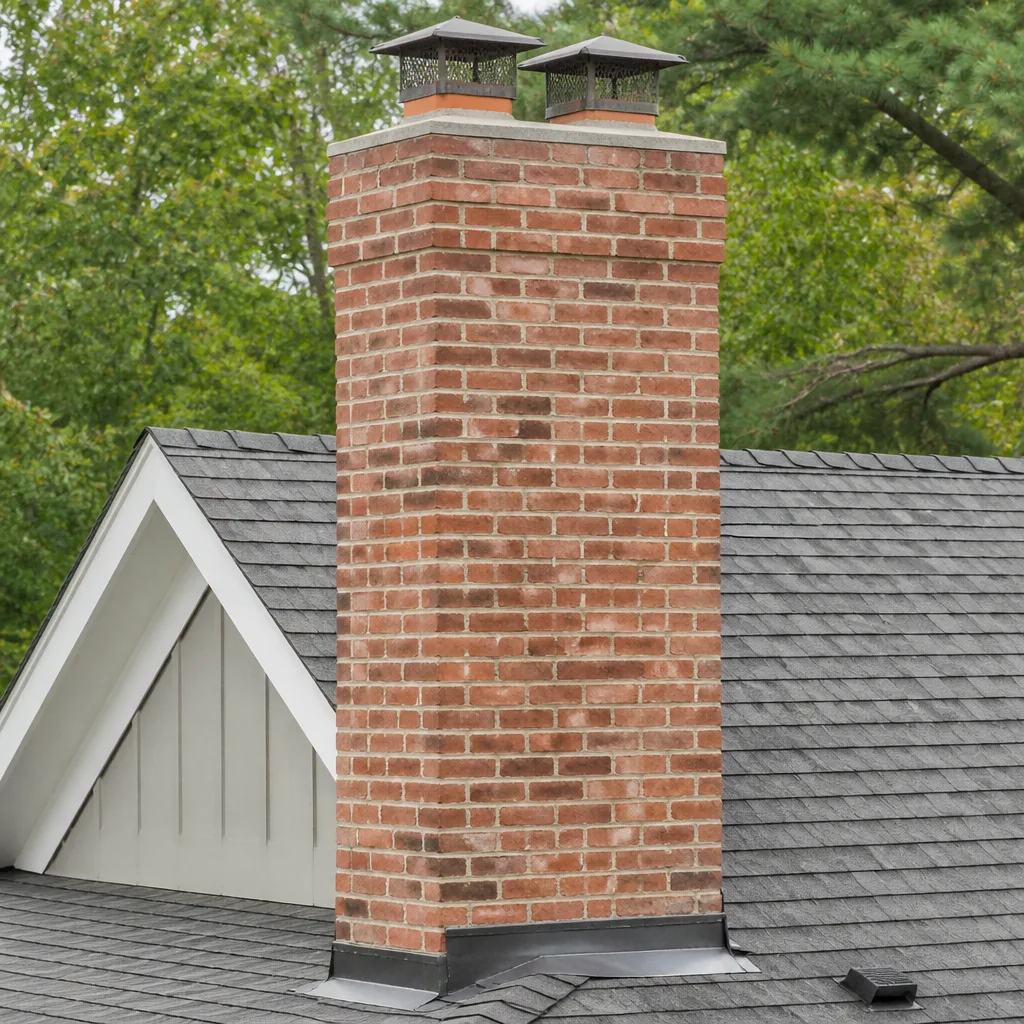 Masonry repair
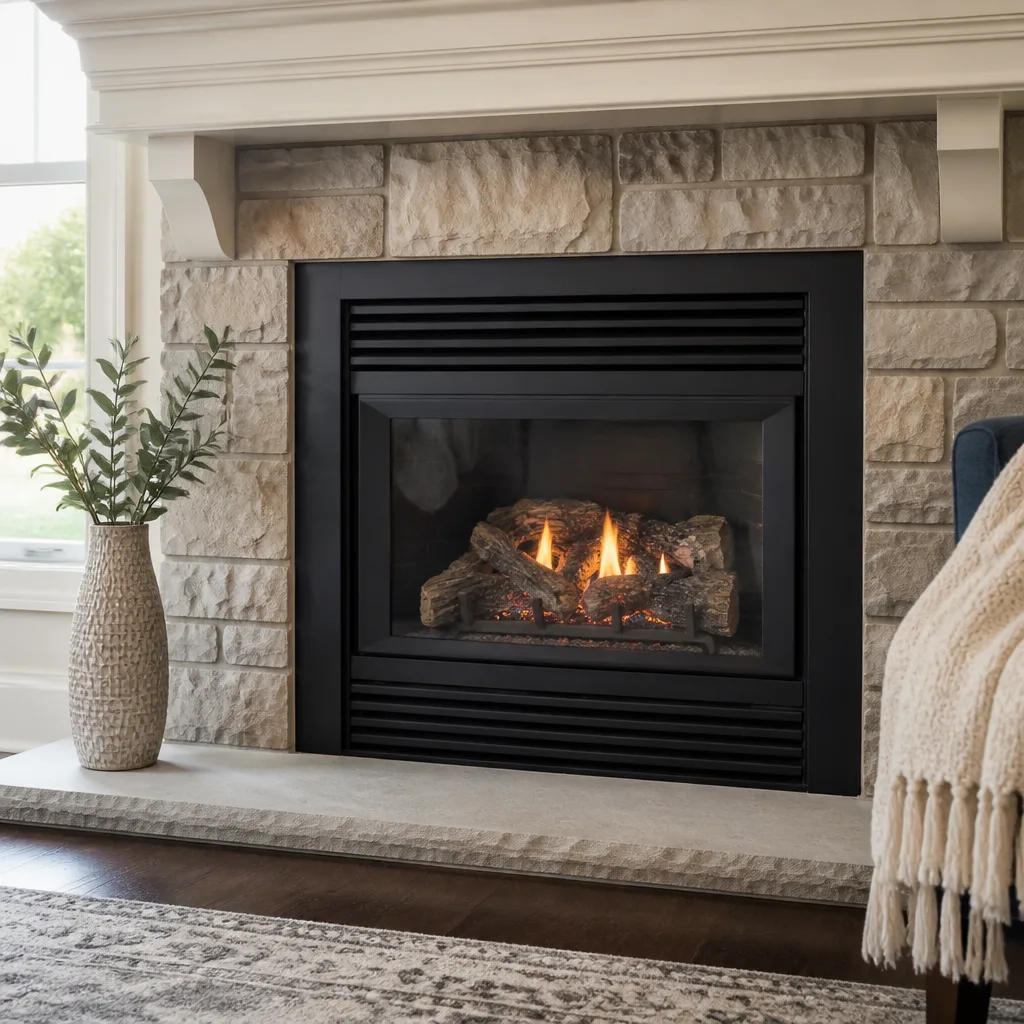 Gas fireplace service
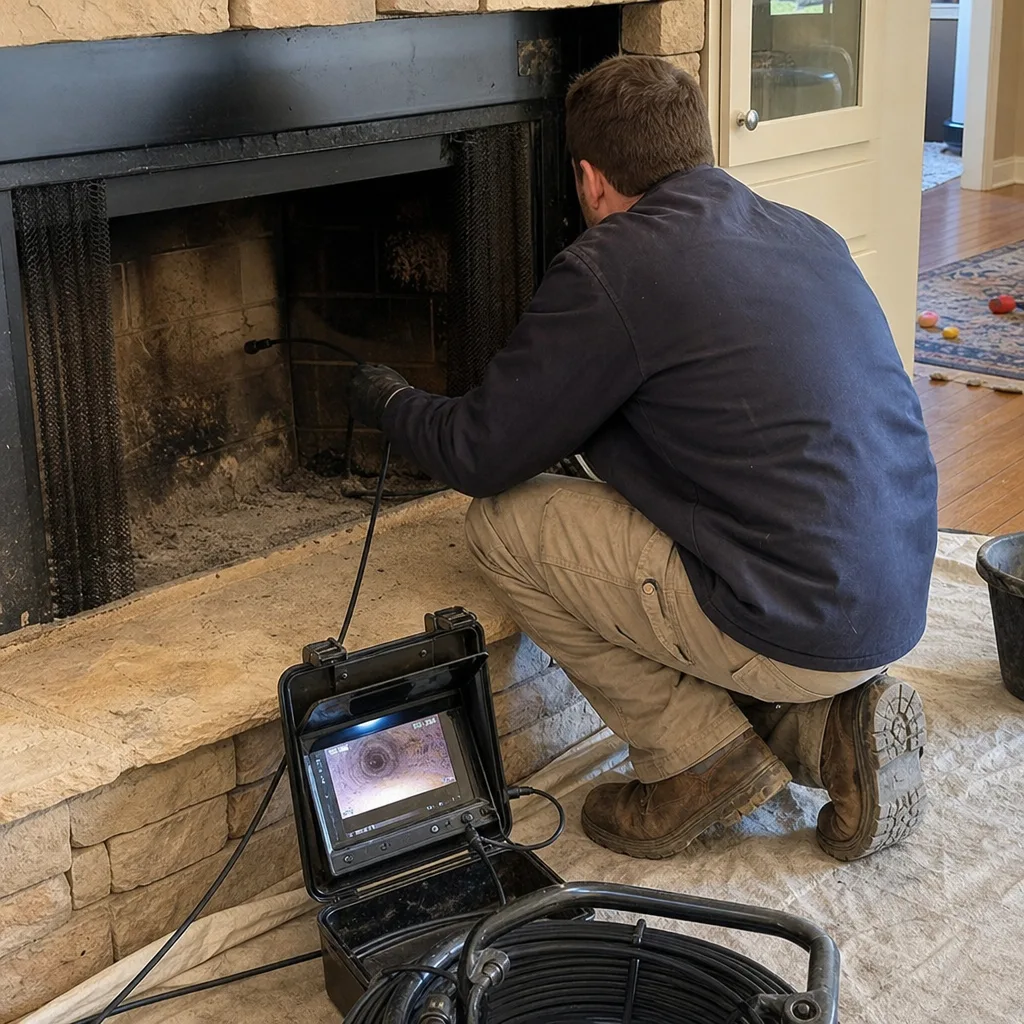
Level 1 sweep and inspection to the NFPA 211 annual standard - flue, crown, cap, and flashing checked and photographed
Chimney sweep logs do not sweep chimneys. They loosen some creosote - which then falls where a brush and vacuum still have to collect it.
DIY vs Professional Chimney Cleaning: The Midtown Homeowner’s Decision Guide
You can buy a chimney brush kit for about $60 and reach most of the flue yourself. That part is true, and we won’t pretend otherwise. What you can’t buy at a hardware store is the knowledge to recognize a cracked liner, a compromised smoke chamber, or Stage 2 creosote before you light the next fire. That gap between what a brush can reach and what a trained eye can see is the whole debate. This guide lays out exactly what a homeowner can safely accomplish, where DIY cleaning runs out of road, and the specific factors in Midtown housing that tip the decision one way or the other. By the end you’ll have a framework, not a slogan.
Quick Answer
DIY chimney cleaning is reasonable for a lightly used fireplace with a sound, recently inspected liner, and the work is limited to brushing loose soot from the accessible flue. Professional cleaning is the right call whenever the system’s condition is unknown, the fuel is wood burned frequently, the home is older brick construction, or it has been more than a year since anyone looked at the flue with a camera. A brush removes creosote. It does not tell you whether the liner behind that creosote is still intact, and that distinction is what this guide is about.
Styles & brands we work with
- Sweep & inspection
- Caps & crowns
- Flue relining
- Masonry repair
- Gas fireplace service
Table of Contents
- What a Consumer Brush Kit Can Actually Accomplish
- The Inspection Gap: What DIY Cleaning Cannot See
- Midtown-Specific Risk Factors That Change the Math
- Liability and Insurance: Why Maintenance Records Matter
- A Decision Framework: Four Variables That Actually Matter
- Cost Comparison: DIY Kits vs Professional Service
- Understanding Creosote Stages and Why They Matter
- The Hybrid Approach: DIY Between Professional Visits
What a Consumer Brush Kit Can Actually Accomplish
A homeowner with the right brush, rods, and a drop cloth can do legitimate work. Consumer kits are designed to remove loose soot and light, fluffy creosote from a straight flue, and for a fireplace that sees occasional fires with well-seasoned wood, that’s a real maintenance task done reasonably well. We’re not going to talk you out of a job you can competently do.
Here’s what a brush kit does well:
- Removes loose soot and Stage 1 creosote from the flue walls above the damper, which is the bulk of what accumulates with light use.
- Clears a straight flue run where the brush can travel from the top or bottom without obstruction.
- Handles surface deposits on a masonry flue that has been cleaned regularly and hasn’t developed glazed buildup.
- Gives you a baseline look at the firebox and damper area from the room side, which is better than no look at all.
And here’s where the brush stops being enough. A consumer kit won’t get a stubborn glaze off a flue wall, won’t reach offsets or smoke chambers in a masonry chimney, and won’t clean the flue of a prefabricated system to the manufacturer’s spec without the right size and type of brush. Many older Midtown homes have flues with slight bends, shared masonry stacks, or flue tiles that a homeowner-sized brush can’t confirm he or she even sized correctly. If the flue is the wrong diameter for the brush, you either scrub the walls unevenly or miss them entirely, and you’d never know from the room side. That’s the first honest limit: the brush does useful work but doesn’t verify its own results.
The Inspection Gap: What DIY Cleaning Cannot See
Cleaning and inspection are two different jobs, and this is the point most DIY guides skip. A brush removes deposits. An inspection evaluates the liner, the smoke chamber, the damper, the crown, and the cap, and it usually needs tools and access a homeowner doesn’t have. That’s the real gap.
1. A chimney camera. Video inspection lets a technician see the full flue from the firebox to the top, including cracks in clay tile liners, gaps at joints, and the condition of a stainless liner where it bends. A flashlight pointed up from the damper doesn’t show you the back side of a flue tile twenty feet up.
2. Access to the top. Roof-level inspection of the crown, cap, and flashing requires getting on the roof safely. A cracked crown or a missing cap is a moisture intrusion path, and you can’t see either from inside the house.
3. A trained eye for the smoke chamber. The smoke chamber sits above the damper and is often corbeled brick that corrugated over decades. It’s a hotspot for creosote buildup and a place where a homeowner has no visual access at all without dismantling part of the system.
4. Knowledge of what’s normal. Experience matters here. A technician who has inspected hundreds of chimneys recognizes a hairline crack or a rusted liner connection that a first-time DIYer would read as normal wear. Our technicians have up to 14 years of experience, and the thing that experience buys is pattern recognition. A homeowner doing this once can’t have it.
We always document what we find before we recommend anything, which means the inspection comes first and the findings drive the recommendation. That’s the part a brush kit can’t replicate.
Midtown-Specific Risk Factors That Change the Math
Chimney decisions aren’t made in a vacuum. They’re made in a specific house, on a specific block, with a specific set of conditions. Midtown’s housing stock and tree canopy push the risk profile in a few directions worth naming.
Older brick construction and aging liners
A lot of Midtown homes were built with clay tile liners that have been through decades of heating and cooling cycles. Clay tile is durable but brittle, and it cracks. A cracked tile lets creosote and heat reach the surrounding masonry, which is a fire path, and it lets carbon monoxide escape into the structure. You cannot see a cracked tile from the firebox side. That’s a structural fact, not a sales pitch, and it’s the single biggest reason we recommend a camera inspection on older Midtown homes before deciding whether DIY cleaning is safe.
Gas conversion systems
Plenty of Midtown fireplaces have been converted to gas logs or gas inserts over the years. A gas fireplace produces different combustion byproducts and often needs a different cleaning schedule and liner arrangement than wood. A homeowner who treats a gas conversion like a wood fireplace and brushes it may be ignoring the real maintenance need, and worse, may not realize a gas system can have its own venting problems. Venting for gas appliances is not a “brush it and forget it” job.
Tree canopy near caps
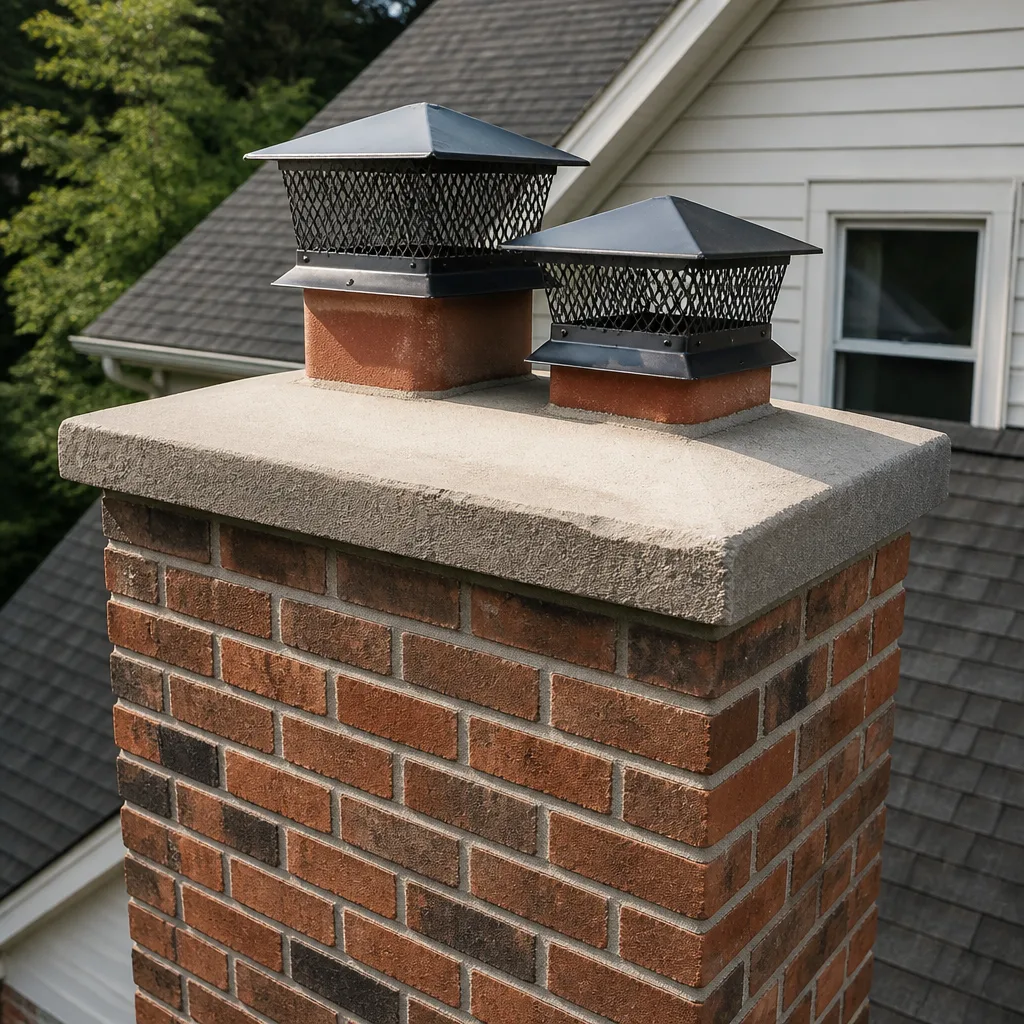
Midtown’s mature trees are one of the neighborhood’s best features and one of its chimney’s quiet problems. Leaves, twigs, and seed pods drop onto and into caps, and a partially blocked cap restricts draft and can push exhaust back into the house. Debris in a cap isn’t visible from inside, so a homeowner who only cleans from the firebox upward may never notice it. A roof-level check catches it. If your cap is missing, damaged, or improvised, that’s a job for a purpose-built chimney cap & crown rather than a hardware-store screen.
Shared masonry stacks and tight urban lots
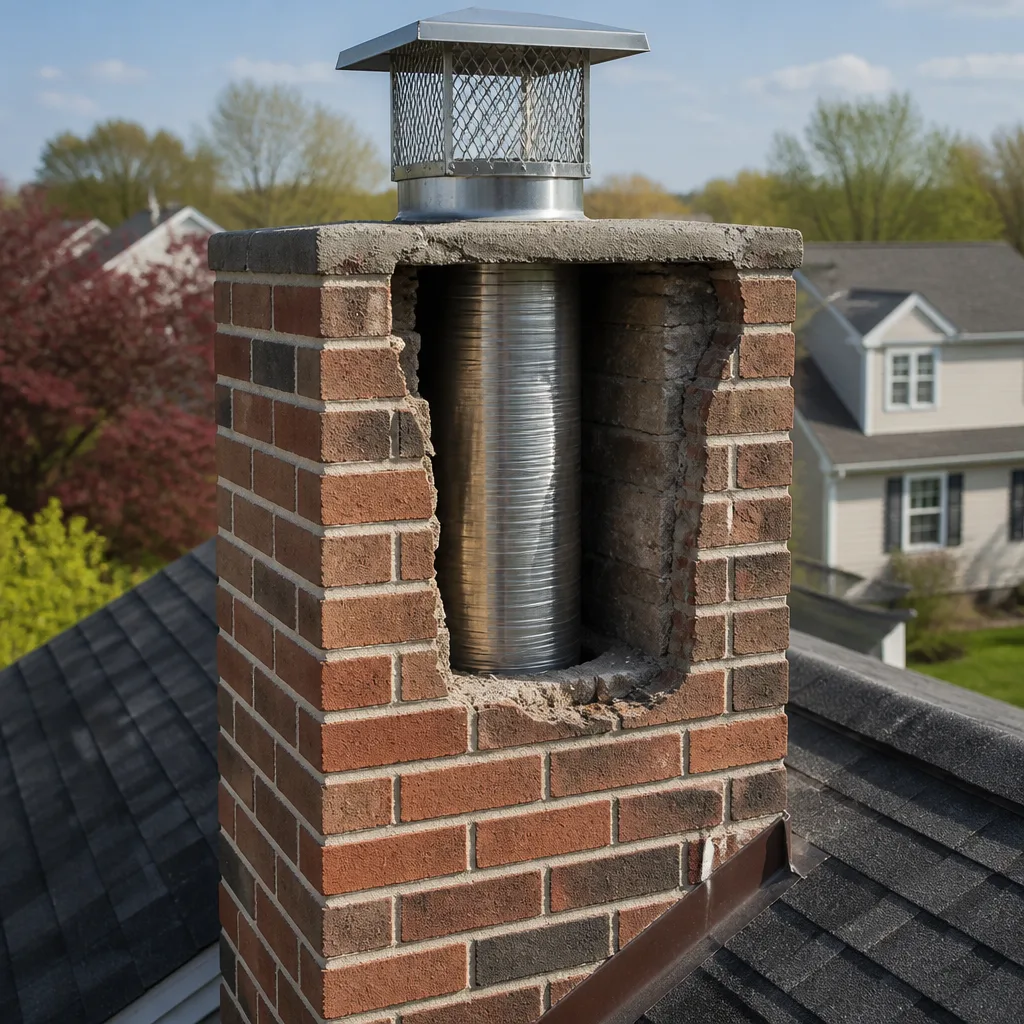
Midtown’s density means chimneys are often close to neighboring structures and rooflines, and some homes share or abut masonry stacks. That geometry makes careful inspection more important, not less, because a problem in one flue can affect the shared structure. It’s also a reason we favor professional-grade components like the DuraFlex flexible liner systems we’re authorized to install. Complex flue geometries with offsets and bends are common in older urban housing, and a flexible liner handles them in a way a rigid liner can’t.
Liability and Insurance: Why Maintenance Records Matter
Here’s the uncomfortable question: if a chimney fire happens, what does your insurer ask for? The answer, in most cases, is evidence of maintenance. Insurers investigating a fire loss routinely want to know when the chimney was last cleaned and inspected, who did the work, and whether the homeowner followed professional recommendations. A DIY cleaning leaves no third-party record. A professional visit from a company like Chimney Sweep Midtown leaves a documented inspection with findings and photos, and that record is what answers the question if it’s ever asked.
We’re not going to tell you a DIY cleaning voids your policy. That’s a legal question for your insurer, not for us. But we can tell you plainly what we’ve seen: documentation is the difference between a claim that gets processed smoothly and one that turns into a dispute over whether the loss was preventable. A professional inspection report, with a dated record of what the flue looked like and what was recommended, is the strongest form of that documentation a homeowner can hold.
A sweep is a starting point, not the whole job. The accompanying inspection is what produces the record, and it’s the piece a DIY effort leaves out entirely. When you’re weighing the cost of a professional visit against the cost of a kit, factor in that record. It’s part of what you’re buying.
A Decision Framework: Four Variables That Actually Matter
The DIY versus professional question isn’t a yes/no. It’s a set of four variables, and the answer falls out of how they combine for your specific chimney. Use this as a working framework.
1. System age and material
A newer prefabricated stainless system with a documented install and regular service is a different risk profile than a 60-year-old clay tile liner in a Midtown brick chimney. Older clay tile systems deserve a professional inspection before any DIY cleaning, because the liner condition is unknown and the whole point of cleaning is to make the flue safe to use. If the liner is cracked or deteriorating, a HeatShield ceramic resurfacing can often restore it instead of a costly full reline, but only when the flue qualifies, and a technician has to assess that.
2. Last professional inspection date
If a qualified technician inspected the system within the past year and found it sound, a homeowner can reasonably do light brushing between professional visits. If nobody has inspected it in years, DIY cleaning is being done blind. That’s the single variable that should override the others.
3. Burn frequency
A fireplace used a handful of times per season accumulates little creosote and brushes out easily. A fireplace used as serious supplemental heat, several times a week through the heating season, accumulates much faster and needs more frequent professional attention. Burn frequency drives creosote volume, and creosote volume drives risk.
4. Fuel type
Well-seasoned hardwood produces less creosote than unseasoned or soft wood, and gas produces different byproducts entirely. The fuel type dictates the cleaning schedule and, in the gas case, the inspection points. A wood fireplace burning damp wood needs more frequent professional cleaning than one burning dry hardwood.
Put those together and the framework is simple: recent professional inspection plus light use plus sound liner equals DIY brushing is reasonable between visits. Unknown liner condition, heavy wood use, older clay tile, or a gas conversion equals professional inspection first, every time.
Cost Comparison: DIY Kits vs Professional Service
Cost is the honest reason most people ask the question, so let’s put the pieces on the table without pretending one side is free. A DIY kit has a real upfront cost and a real ongoing time cost. Professional service has a per-visit cost and includes the inspection and documentation. Here’s how the line items break down in general terms.
- Consumer brush kit and rods: a modest one-time purchase, but sized correctly for your flue only if you measure and match it, and it won’t include a camera or inspection tools.
- Your time and cleanup: brushing a flue is a messy job that requires drop cloths, protective equipment, and careful containment to avoid soot throughout the house.
- Professional sweep: priced per job by a written estimate, and it includes the inspection, so you’re paying for cleaning plus the diagnostic look.
- Professional repair if needed: only recommended when the inspection documents a specific problem, and the estimate sets the price. Nothing is recommended without evidence you can see for yourself.
We set every price per job by a written estimate, and the estimate is free. That means the number you get is specific to your chimney, not a guess over the phone. Call (877) 820-8520 for an exact quote. We don’t publish a flat fee here because chimneys vary, and a number that’s right for a simple single-flue cleaning isn’t right for a multi-flue masonry stack with a smoke chamber that needs work.
Understanding Creosote Stages and Why They Matter
Creosote is the reason chimney cleaning exists, and it comes in three forms a homeowner should understand. This is the technical core of the DIY decision, because the form of creosote in your flue determines whether a brush can handle it.
Stage 1: soot and light flaky creosote. This is what a brush kit is designed for. It brushes off the flue walls with reasonable effort and is the normal result of regular burning with decent fuel. DIY cleaning handles Stage 1 fine.
Stage 2: hardened, crusty creosote. This is denser and adheres to the flue wall. A standard brush will remove some of it but often leaves a residue that builds up over the season. It’s a sign the fireplace is being used heavily, the wood is damp, or the flue is running cool. This is the stage where professional cleaning starts to matter, because a technician has the tools and the technique to remove it fully.
Stage 3: glazed creosote. This is the dangerous one. It’s hard, shiny, and bonded to the flue wall, and brushing it makes it worse by polishing it. Removing glazed creosote is a professional job that may call for chemical treatment or liner restoration. It cannot be brushed out by a homeowner, and it’s the form most closely associated with chimney fire risk. If you don’t know which stage your flue is at, that’s the answer to the DIY question right there: you need an inspection to find out.
Glazed creosote is the reason we don’t recommend DIY cleaning as a substitute for inspection. Creosote that looks like a little soot to a homeowner can be glazed buildup to a technician, and the difference is safety-critical. That’s not a scare tactic. It’s the physics of what happens in a flue that runs cool and accumulates.
The Hybrid Approach: DIY Between Professional Visits
For many Midtown homeowners, the right answer isn’t either/or. It’s a hybrid: professional inspection and cleaning on a schedule, with light DIY brushing in between to keep loose soot down. This works well for systems that have been professionally checked and found sound.
Here’s how the hybrid approach usually runs:
- Start with a professional inspection and cleaning. This establishes the baseline: the condition of the liner, the smoke chamber, the cap, and the crown, documented with findings.
- Get a cleaning schedule based on your burn frequency and fuel. A lightly used fireplace needs professional attention less often than a heavy supplemental-heat user. The schedule is set by your actual use, not a blanket rule.
- Do light brushing between professional visits if you’re comfortable with the tools and the flue is straight and sound. This keeps loose soot from accumulating between scheduled cleanings.
- Watch for red flags and call before you burn again if you notice a strong creosote smell, visible damage at the firebox, smoke rolling back into the room, or a cap that looks damaged or blocked.
- Come back to a professional for the next inspection. The whole point of the hybrid is that the critical look happens on a schedule, and the routine brushing is just maintenance in between.
If you’re not sure whether your system is a good candidate for the hybrid approach, a professional chimney sweep visit is the starting point. The inspection tells you whether the liner is sound enough for you to take on the in-between work safely, and the documentation from that visit is what you’ll rely on when your schedule brings you back.
What Happens When a Professional Visits
If you’ve never had a professional cleaning, it helps to know what the visit actually involves, so you can compare it fairly to a DIY session. It’s not a mystery box, and knowing the steps is part of making a real decision.
- Setup and containment. Drop cloths, protective equipment, and containment around the firebox, so soot ends up in the vacuum and not on your furniture.
- Inspection before cleaning. The technician looks at the firebox, damper, smoke chamber, and flue, and uses a camera to see the full run of the flue from the firebox to the top. This is the part a brush kit can’t do.
- Roof-level check. The crown, cap, and flashing are inspected from the roof, where moisture intrusion paths show up.
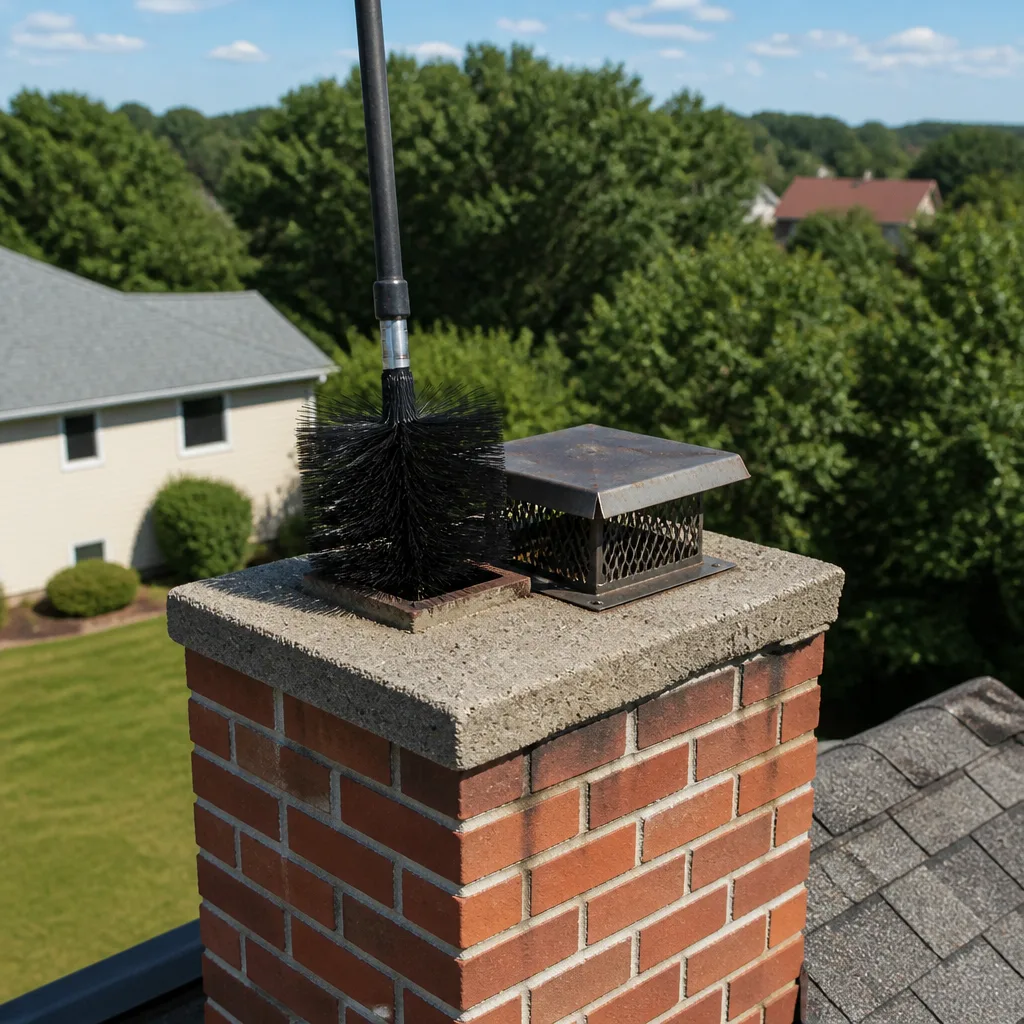
- Cleaning. The flue is brushed with the correctly sized brush for the flue’s diameter and type, top to bottom, and the firebox and smoke shelf are cleaned.
- Documentation. Findings and photos are recorded, and any recommendation is tied to a specific finding rather than a general upsell.
Every job we do begins with an inspection, so repairs are grounded in documented findings. That sequence is the whole difference between professional cleaning and DIY cleaning. The cleaning is the visible part. The inspection and the documentation are what you’re actually paying for, and they’re the part a kit leaves out.
When DIY Cleaning Is Genuinely the Right Call
We’d rather tell you when to do it yourself than pretend it’s always wrong. There are clear cases where DIY cleaning is reasonable and we’d say so.
- The system was professionally inspected within the past year and found sound, and nothing has changed since.
- The fireplace is lightly used, a few times a season, with well-seasoned hardwood, so only Stage 1 soot accumulates.
- The flue is straight and accessible, and you’ve confirmed the brush is correctly sized for the flue diameter.
- You’re comfortable with the physical work and the cleanup, and you have the drop cloths and protective equipment to contain soot properly.
- You’re brushing between scheduled professional cleanings, keeping the system tidy without letting it drift out of professional view for years.
If any of those conditions fail, the calculation shifts. The most common failure is the first one: no recent professional inspection. A homeowner brushing a flue that nobody qualified has looked at is cleaning an unknown quantity, and the risk lives in what’s unknown.
See the difference
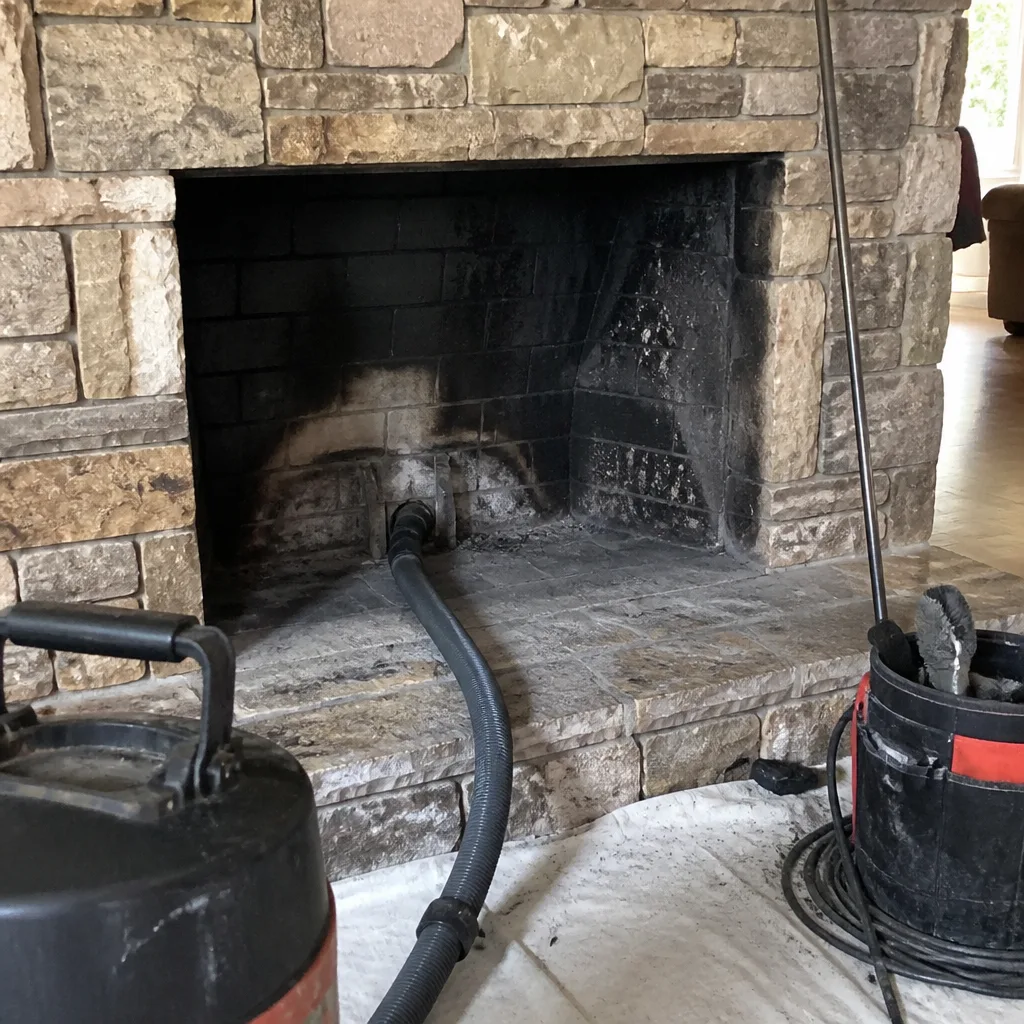 Before
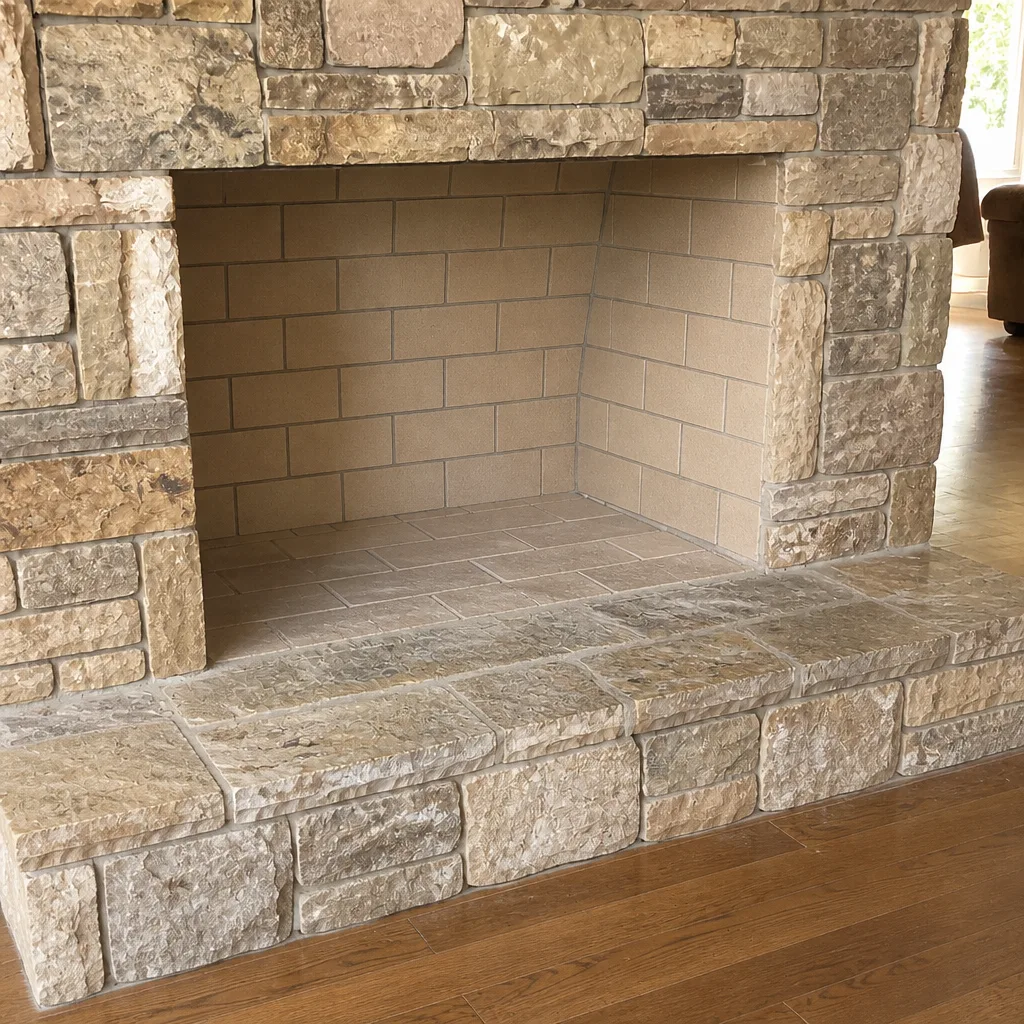 After
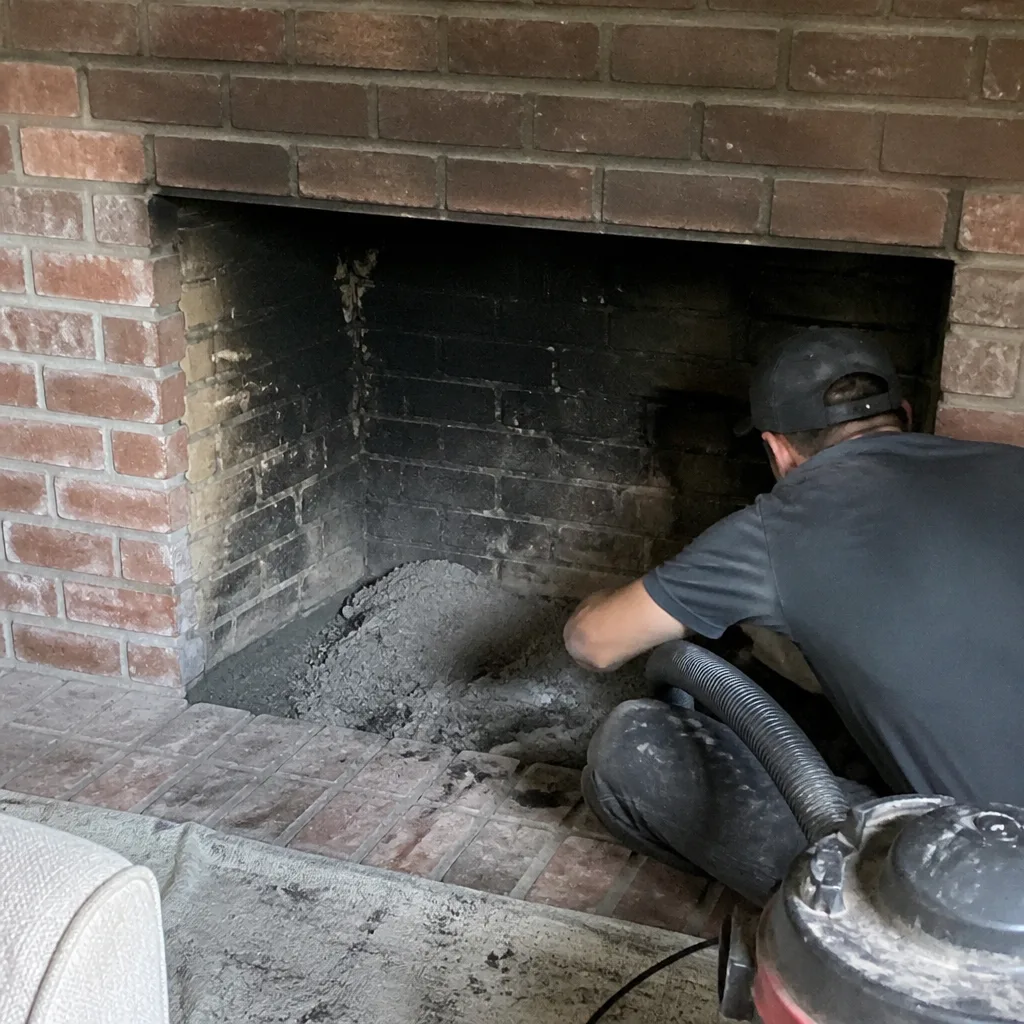 Before
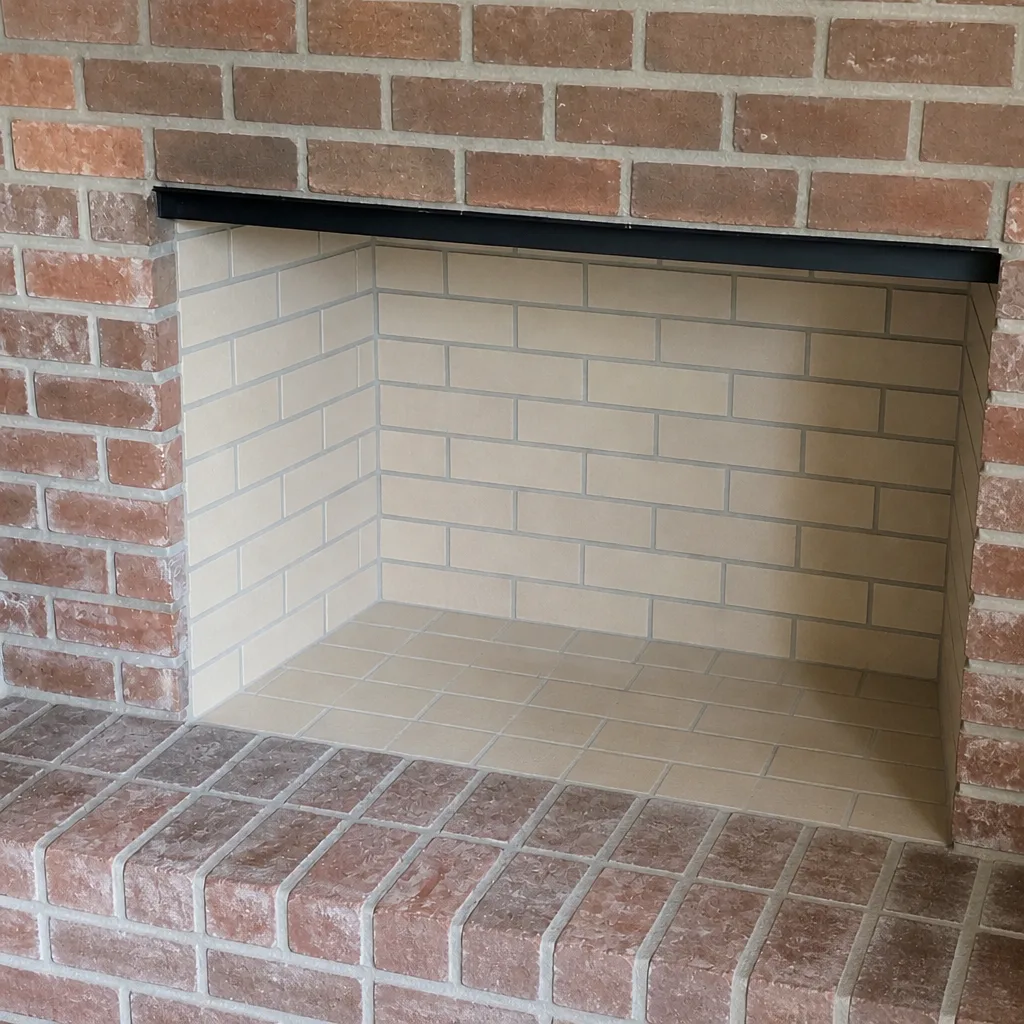 After
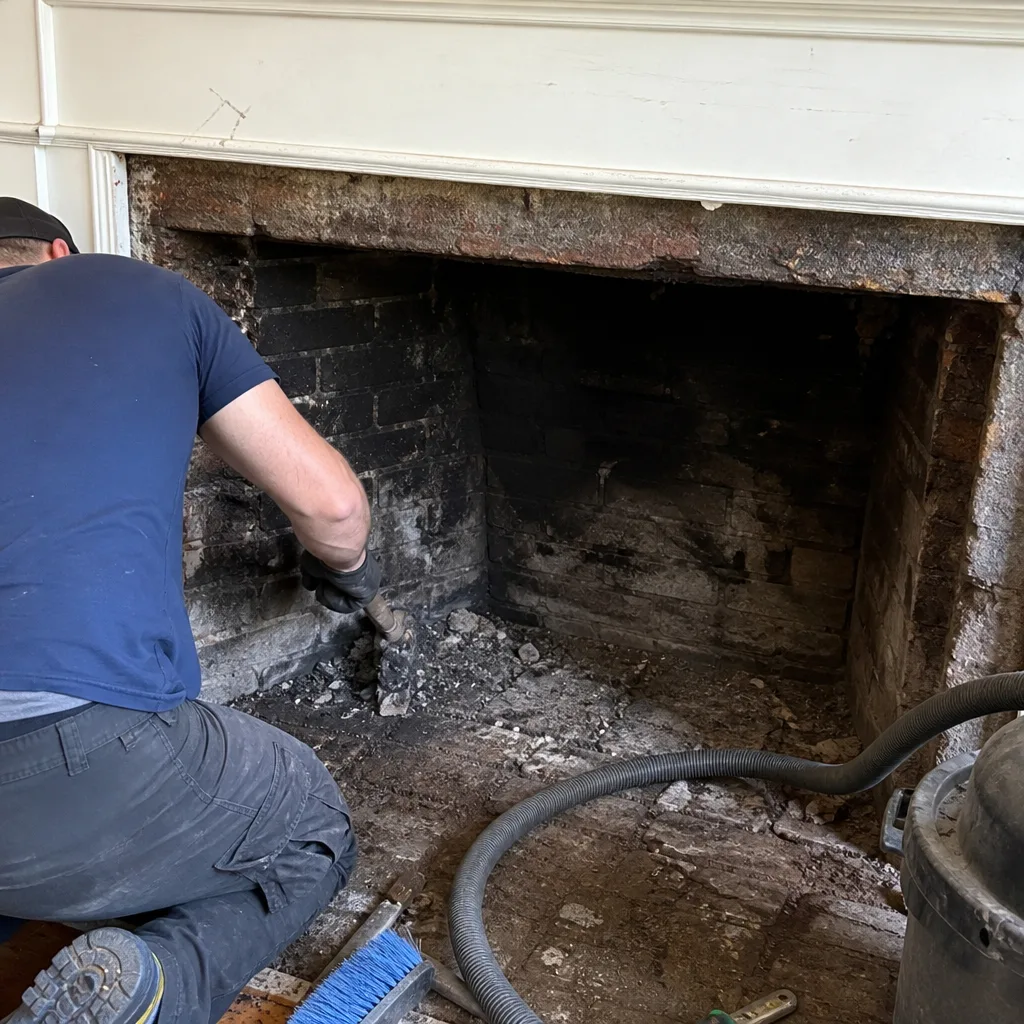 Before
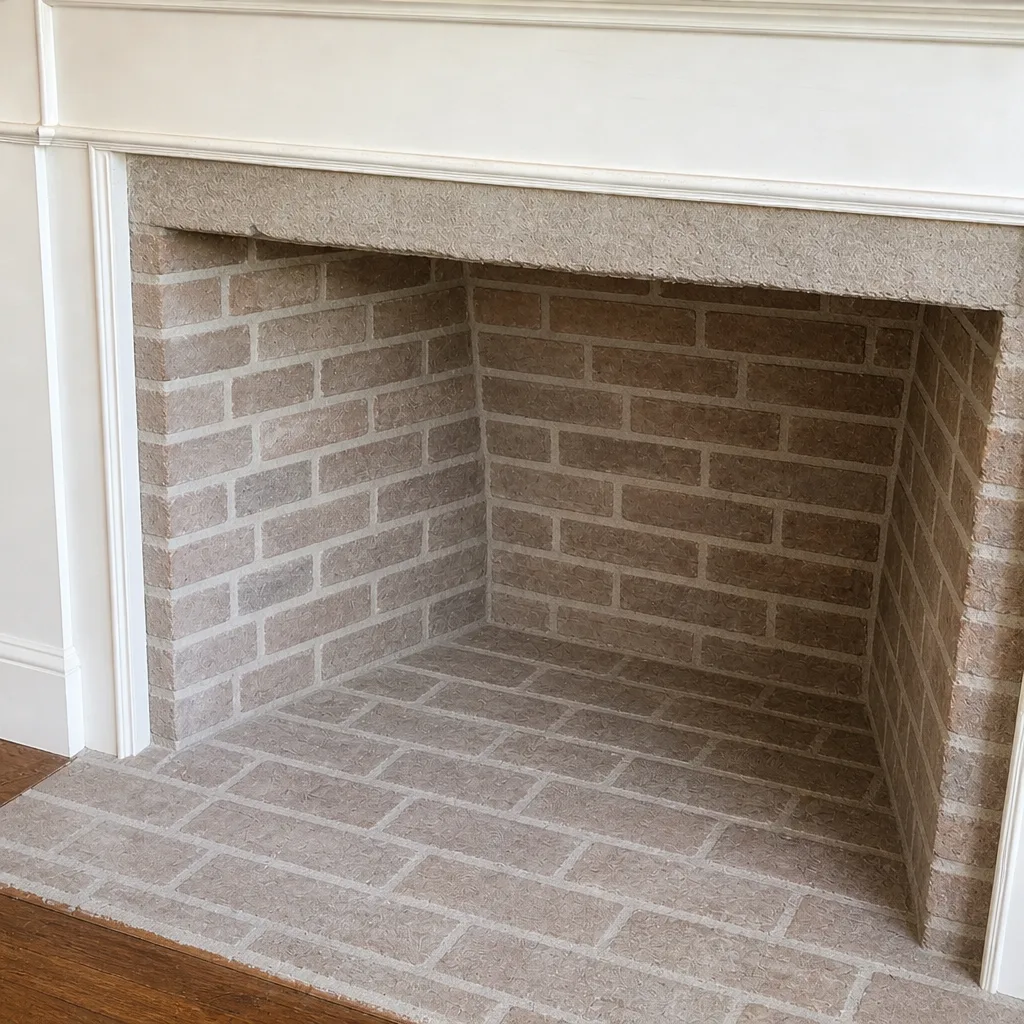 After
Common Mistakes to Avoid
- Assuming a clean flue is a sound flue. Brushing removes soot, but it doesn’t tell you whether the liner behind it is cracked. A homeowner who cleans and sees no obvious problem can miss a cracked tile that a camera would find in minutes.
- Buying a brush without sizing it to the flue. The wrong diameter brush either scrubs unevenly or misses the walls entirely, and the error is invisible from the room side. Measure first, or have a professional confirm the flue diameter.
- Skipping the roof-level check. Caps and crowns are where moisture intrusion lives, and they’re visible only from the top. A Midtown tree canopy drops debris into caps every season, and that debris isn’t visible from the firebox.
- Treating a gas conversion like a wood fireplace. Gas systems have their own venting needs and cleaning schedules, and a brush doesn’t address them. If your fireplace has been converted, don’t assume a wood-fireplace cleaning routine applies.
- Cleaning over glazed creosote and making it worse. Brushing Stage 3 glazed creosote polishes it and makes it harder to remove. If the buildup is hardened or shiny, stop and get a professional assessment.
- Letting years pass between professional inspections. Light DIY maintenance can become a substitute for the inspection that actually protects the system. Keep the professional visit on the schedule even if you brush in between.
- Cleaning without documenting anything. A DIY cleaning leaves no record of what the flue looked like or what you did. If your insurer ever asks about maintenance, the record is what answers the question.
When to Call a Professional
Call a professional whenever the condition of the flue is unknown, whenever the system is older brick or clay tile, whenever the fireplace has been converted to gas, and whenever the last professional inspection was more than a year ago. Call immediately if you notice smoke rolling back into the room, a strong creosote smell, visible damage at the firebox or damper, or a cap that looks blocked or damaged by tree debris. If you’re unsure, err on the side of the camera inspection. Chimney Sweep Midtown offers free estimates in Midtown – call (877) 820-8520. Call (877) 820-8520. We answer 24/7. Fast dispatch from 7am to 7pm, Sunday through Friday. From the firebox to the cap, we service the whole system, and we document what we find before we recommend anything.
For fireplace-specific problems, our fireplace repair team handles the firebox, damper, and smoke chamber side of the system, so a single visit can address more than cleaning when the inspection finds an issue.
Frequently Asked Questions
Yes, for a lightly used fireplace with a sound liner that was professionally inspected within the past year, you can reasonably brush loose soot from a straight, accessible flue with a correctly sized consumer kit. The limits are inspection, glazed creosote, and anything above or behind what the brush can reach. If the system’s condition is unknown, get it inspected first. Call (877) 820-8520 for a free estimate.
It depends on the creosote stage and the liner condition, and you can’t reliably tell either from the room side. Light flaky soot is brush-friendly. Hardened crusty or glazed creosote needs professional tools, and a cracked liner needs professional eyes. A camera inspection is the only way to know which situation you have. Call (877) 820-8520 to get that answered with evidence you can see.
Older brick homes with clay tile liners are more likely to have cracks and joint gaps that a brush can’t reveal, so a professional camera inspection is the right starting point before any DIY cleaning. Midtown’s housing stock includes a lot of systems that have been through decades of heating cycles. Once a professional establishes the baseline, the schedule can relax to the system’s actual condition.
Glazed creosote is hard, shiny, and bonded to the flue wall, and brushing it polishes it rather than removing it, which makes it harder to take off later. It’s a professional job that may call for chemical treatment or liner restoration. If you see shiny, hardened buildup rather than fluffy soot, stop and get a professional assessment. Call (877) 820-8520.
Insurers investigating a fire loss routinely want evidence of maintenance: when the chimney was cleaned, who did it, and what was recommended. DIY cleaning leaves no third-party record, while a professional visit leaves a documented inspection. Whether that affects a specific policy is a question for your insurer, but the record is the part you can control. Call (877) 820-8520 to establish one.
A blocked cap restricts draft and can push exhaust back into the house, and you won’t see it from the firebox. It’s a roof-level problem that needs a roof-level look. If the cap is damaged or improvised, a purpose-built cap from a supplier like Olympia Chimney or a Famco cover solves it properly. Call (877) 820-8520 for a free estimate.
The Bottom Line
The DIY versus professional question comes down to what you can verify. A brush kit removes soot you can see. It doesn’t inspect a liner you can’t, doesn’t find a cracked clay tile twenty feet up, doesn’t identify glazed creosote, and doesn’t check the cap and crown where Midtown’s tree canopy drops debris every season. Use this framework: recent professional inspection plus light use plus sound liner means DIY brushing between visits is reasonable. Unknown liner condition, heavy wood use, older brick construction, or a gas conversion means professional inspection first. The hybrid approach is the realistic middle, with professional visits on a schedule and light brushing in between. Whichever you choose, keep the professional inspection in the loop, because that’s where the risk actually lives. Call (877) 820-8520 for a free estimate. We answer 24/7. Fast dispatch from 7am to 7pm, Sunday through Friday.
Written by the team at Chimney Sweep Midtown.