
Last updated November 24, 2026
 Sweep & inspection
 Caps & crowns
 Flue relining
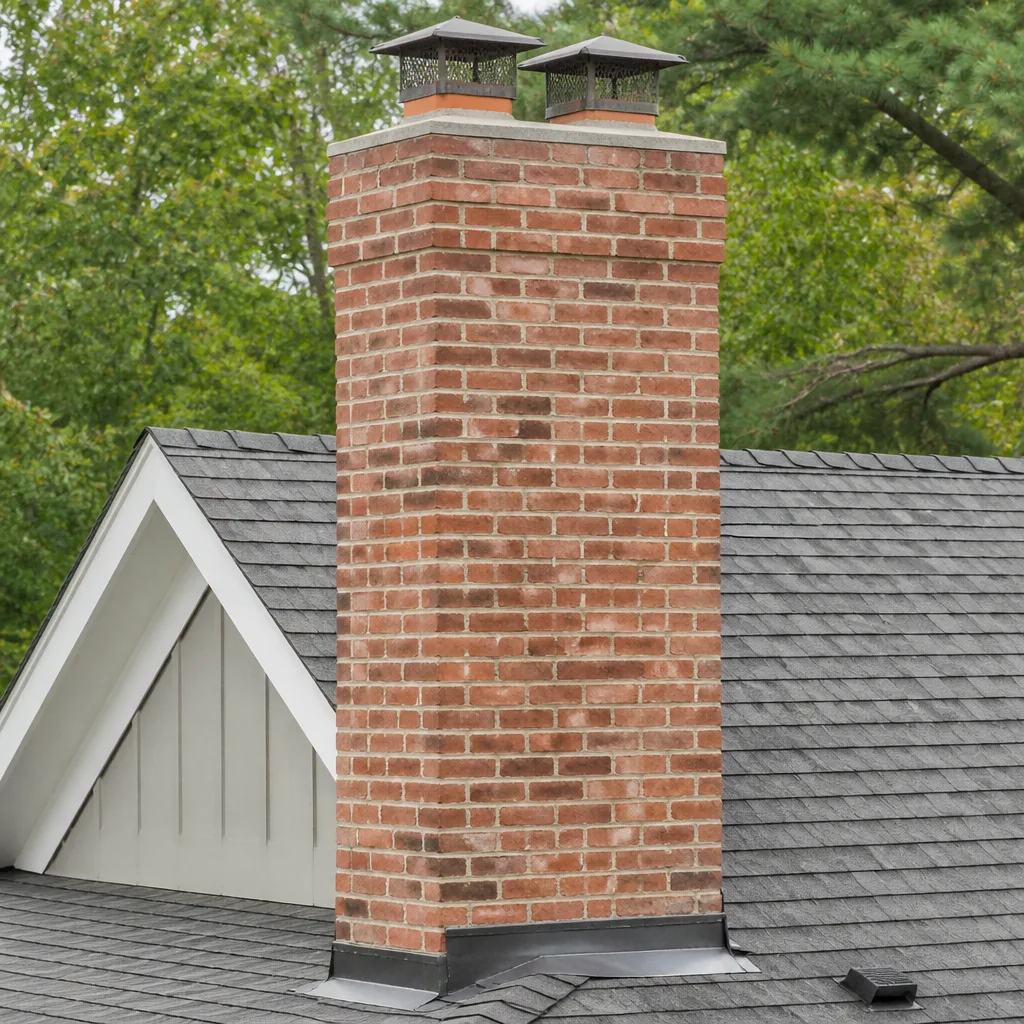 Masonry repair
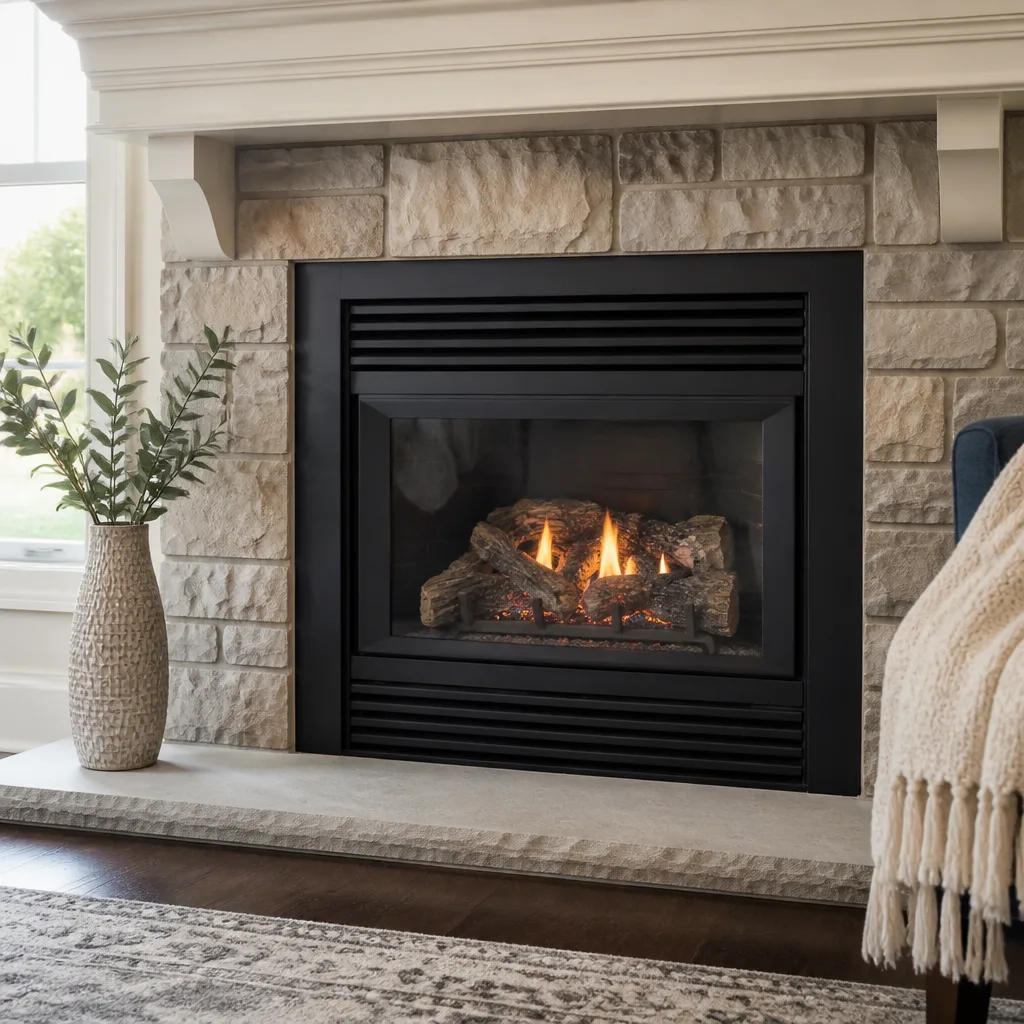 Gas fireplace service
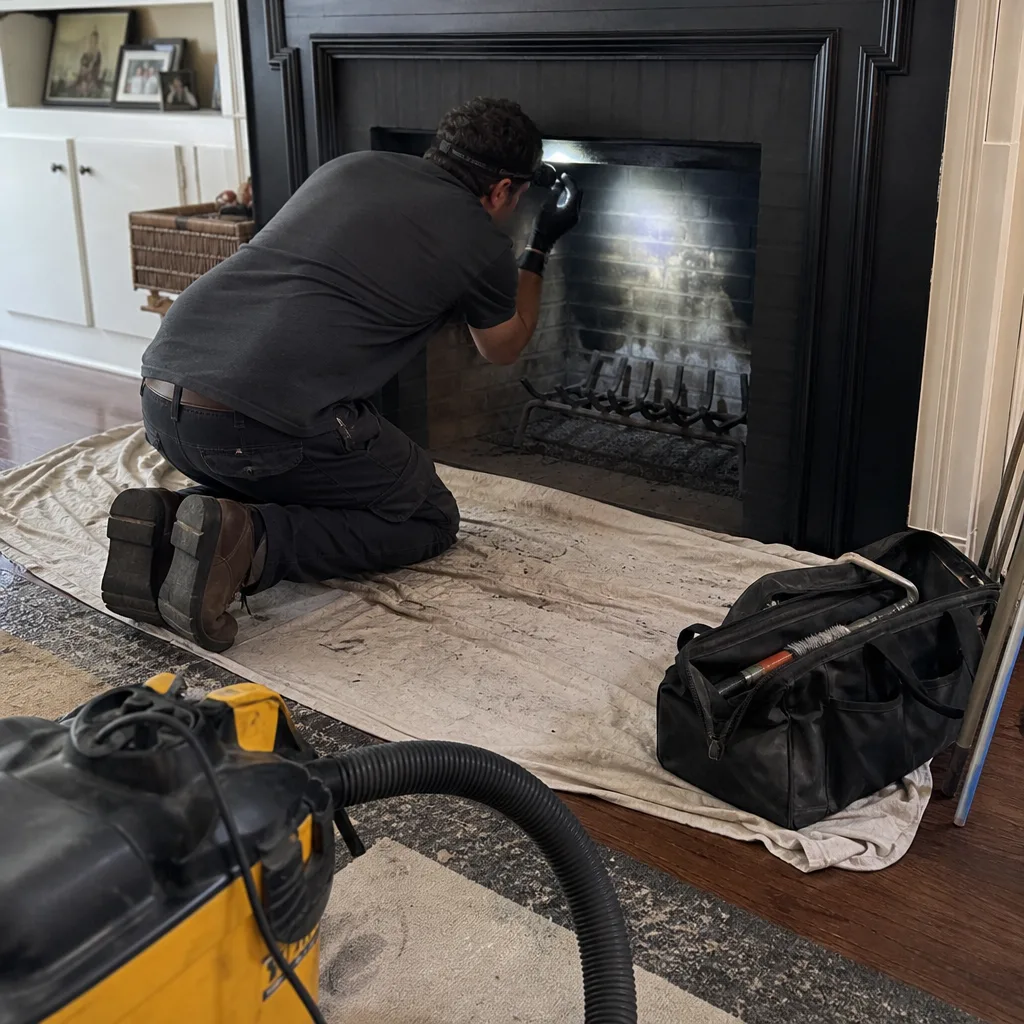
Level 1 sweep and inspection to the NFPA 211 annual standard - flue, crown, cap, and flashing checked and photographed
Chimney sweep logs do not sweep chimneys. They loosen some creosote - which then falls where a brush and vacuum still have to collect it.
Chimney Cleaning Emergency Preparedness Guide for Midtown Homes
A chimney fire can reach 2,000°F inside a flue in under a minute. Most homeowners don’t know they’re having one until they hear the roar, and by then the decisions made in the next two minutes determine the outcome. That’s the part almost nobody prepares for. A fire extinguisher sitting in the hall closet won’t do much against a fire burning inside the flue, and most chimney emergencies aren’t handled by reacting in the moment. They’re handled weeks earlier, by knowing how your system is built, what condition it’s in, and what you’d actually do if something went wrong. This guide covers the specific sounds, smells, and steps that matter, in order. It’s written for Midtown homes with the older flue layouts and dense housing stock that shape how these events play out.
Quick Answer
Chimney emergency preparedness means knowing three things before you ever light a fire: the type and material of your flue, the date of your last professional inspection, and the exact sequence of actions to take if you suspect a chimney fire or carbon monoxide event. In Midtown, where many homes have interior chimneys set close to living space, the fastest way to protect your household is a documented inspection that tells you what you’re dealing with, followed by a written plan you keep near the fireplace. Everything else in this guide builds on those three facts.
Styles & brands we work with
- Sweep & inspection
- Caps & crowns
- Flue relining
- Masonry repair
- Gas fireplace service
Table of Contents
- How Do You Know You’re Having a Chimney Fire?
- What Should You Do With the Damper During a Chimney Fire?
- Carbon Monoxide Risk in Chimney Systems
- What the Fire Department or Emergency Sweep Needs From You
- What Must Happen Before You Relight
- How to Prepare Your Midtown Chimney Before the Season
- Common Mistakes to Avoid
- Frequently Asked Questions
How Do You Know You’re Having a Chimney Fire?
Chimney fires are identified by a roar, a smell, and a visual cue, roughly in that order of reliability. This is one emergency where the evidence often arrives in more than one channel at once. If you catch two of the three, treat it as a fire and act.
Sounds. A chimney fire often produces a low, sustained roar or rumble that sounds like a freight train moving through the chimney chase. It’s distinct from the crackle of a normal fire because it’s continuous and low-pitched, and it often increases in intensity rather than dying down.
Smells. A hot, acrid, almost metallic smell – sometimes described as burning asphalt or scorched paint – means temperatures inside the flue are crossing thresholds the system isn’t designed for. You may also smell smoke inside the room when the damper is open and the firebox is behaving normally.
Visual indicators. Watch for any of these:
- Dense, dark smoke puffing back into the firebox or the room
- Flames or sparks visible from the top of the chimney
- A “puffing” sound from the chimney as combustion gases ignite in bursts
- Creosote flakes falling into the firebox or landing on the roof
- Heat radiating from the chimney breast or flue pipe
- Warped or discolored damper or firebox metal after the event
If you’re uncertain whether you’re having a chimney fire or a normal fire with a draft problem, err on the side of caution. Call the fire department. They can identify a chimney fire on arrival, and the cost of a false alarm is nothing compared to the cost of a delayed response.
The reason identification matters so much is that creosote accumulation is invisible from the firebox. In Midtown’s older masonry chimneys, the firebox itself is often lined up perfectly with the flue, so the fire looks normal during an event that’s already underway. A Chimney Sweep Midtown inspection before the season is the only way to know the creosote depth you’re actually working with.
What Should You Do With the Damper During a Chimney Fire?
Close the damper. This is the single most counterintuitive instruction in chimney emergency response, and it runs directly against how fire behaves in every other setting. Fire needs oxygen, so the instinct is to starve it of oxygen. In a chimney fire, that’s actually the correct move: closing the damper restricts the air supply upstream of the fire, cools the flue, and reduces the intensity of the burn inside the chimney itself.
The counterargument – that closing the damper keeps heat and smoke trapped inside the chimney where it can crack the flue – is real but secondary. A cracked flue tile is a repair. A fully oxygenated chimney fire can compromise the structure of the house. The trade-off favors closing.
Here is the sequence most chimney fire response protocols follow:
- Get everyone out of the house. This is first, before anything else. No exceptions.
- Call 911. Say “chimney fire” and give the address.
- Close the damper, if you can safely reach it on your way out.
- Close the firebox doors unless the fire is in the fireplace itself rather than the flue. If fire has escaped the firebox, leave the doors open so the fire department can reach it.
- If you can safely from outside, spray water on the roof around the chimney cap – this is only for a masonry chimney with a safe roof access, and only if two minutes have passed without the fire department on scene. Skip it if you’re unsure.
- Do not re-enter the house until the fire department clears it.
The damper advice only works on a damper you can actually close. Older Midtown fireplaces sometimes have a broken damper, a damper rusted open, or a top-sealing damper that’s only reachable from the roof. This is a real reason to know your damper’s condition in advance. If you’re not sure it operates, test it on a cold day, before fire season.
Carbon Monoxide Risk in Chimney Systems
Carbon monoxide from a chimney system comes from incomplete combustion and a flue that isn’t drafting correctly. That’s a different mechanism than furnace CO, and it produces different warning signs. A furnace can leak CO from a failed heat exchanger directly into the supply air. A chimney doesn’t work that way. A chimney sends CO into the house when combustion gases that should be exiting the flue get pushed back down or sideways instead – what’s called backdraft or spillage.
The conditions that cause backdraft in a chimney system are known and specific:
- A cold flue. If the flue is colder than the room, the initial fire produces smoke faster than the flue can draw it up. This is a house at the start of the season with an unheated mass of masonry around the flue.
- A negative-pressure house. Kitchen exhaust fans, dryer vents, bathroom fans, and modern tight-seal windows can all pull more air out of the house than a chimney can draw in, reversing the draft.
- A blocked or partially blocked flue. Bird nests, creosote buildup, and a missing or damaged cap all reduce the diameter of the flue and cut draft.
- A closed or nearly closed damper. A fire lit with the damper closed spills smoke and CO into the room immediately.
- A flue that’s the wrong size for the appliance. A flue much larger than the fire needs can cool gases too fast, and a flue too small can’t move them out effectively.
All of these are diagnosis items in a professional chimney inspection. A Midtown house with a 1920s interior chimney set into a small floor plan, running through the center of living space, has less margin for error than a new construction with an exterior chase – the gases reach living areas faster, and the CO load hits before anyone smells anything.
Treat CO alarms as a chimney system alert, not just a furnace alert. If a CO alarm goes off while a fireplace or wood stove is in use, the first move is the same as a fire: evacuate and call 911. The second call – after the fire department has cleared the house – is to your chimney professional.
What the Fire Department or Emergency Sweep Needs From You
When you call 911 or an emergency chimney sweep, the specific information you can provide in the first thirty seconds determines the response. The fire department has procedures for chimney fires, but they need to know what they’re walking into. Four facts matter most:
- Flue type. Is this a masonry chimney, or a prefabricated or factory-built system with a metal flue? The firefighting approach differs. A metal flue fire is often extinguished with a dry chemical from the roof. A masonry flue fire may be treated by sweeping the burning creosote down or letting it burn out under observation.
- Liner material. Clay tile, stainless steel, aluminum, or an unlined original flue. Liners fail differently in a fire, and the fire department needs to know what’s happening inside the flue.
- Last service date. If the chimney was swept or inspected recently, the fire department knows the creosote load is likely low. If it’s been years or never, they’ll assume heavy accumulation.
- Fuel type. Wood, gas, oil, or pellets all produce different combustion byproducts and different fire signatures. A gas fireplace “fire” isn’t usually a chimney fire at all – it’s more likely a flue or appliance failure – and the response differs.
Write these four down and keep them near the fireplace. When someone is panicking, four facts already written down are easier to recall than four facts from memory. If you’ve had a professional inspection, the report will have this information on the first page.
One more item the emergency sweep will ask: the address and whether anyone is still inside. Answer quickly. A chimney fire is not a do-it-yourself event, and no one is being dramatic by treating it as a 911 call.
What Must Happen Before You Relight
A Level 2 inspection is required before the fireplace is used again after any suspected or confirmed chimney fire. That’s not a marketing line. It’s the industry standard, and it exists because a chimney fire can damage parts of the system that are invisible from the firebox. The fire may be out. The chimney may look normal. The damage usually isn’t visible. A Level 2 inspection is the only reliable way to know what you’re relighting into.
A Level 2 inspection after a chimney fire includes:
- A camera inspection of the full flue interior, from firebox to cap
- Examination of the flue liner for cracks, gaps, spalling, and joint separation
- Inspection of the firebox walls, damper, smoke chamber, and smoke shelf
- Verification of the chimney cap, crown, and exterior masonry for heat damage
- Inspection of the attic and roof penetrations accessible from the attic
- A written report that documents condition and gives a recommended next step
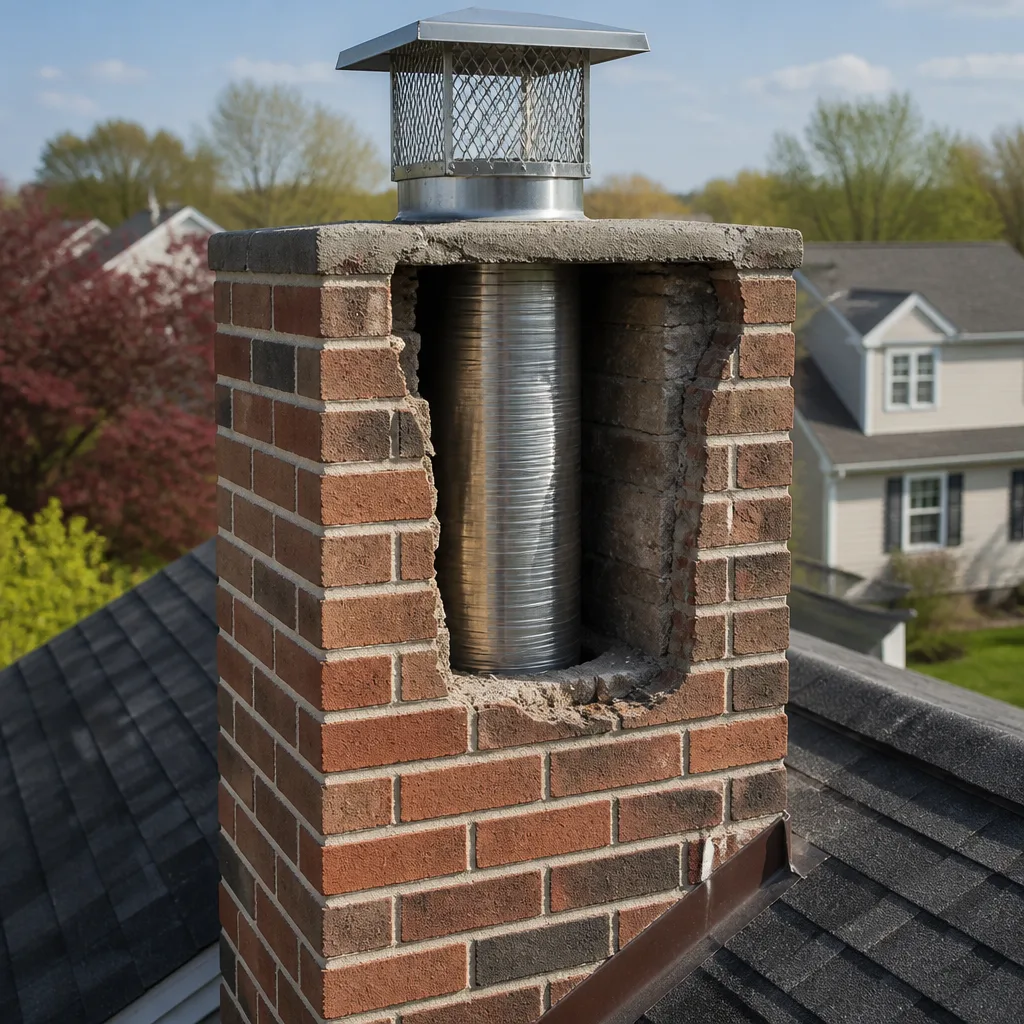
If the flue liner is damaged, the chimney cannot be safely used until it’s relined. This is where material choice matters, and where “just patch it” can put a household at risk. A reline on a Midtown older masonry chimney often requires a flexible system suitable for a flue with a nonstandard or offset geometry – which is why we work with DuraFlex flexible liner systems for tight, offset, or rebuilt flue paths. When the tile is cracked but the flue structure is otherwise sound, a HeatShield ceramic resurfacing can restore the interior surface without a full reline – a specialized application that has to be performed by a trained installer.
The written inspection report is what you keep. It’s also what your insurance may ask for if any damage claim is filed. Documenting condition before relighting is the difference between a clean repair history and an undocumented mess.
How to Prepare Your Midtown Chimney Before the Season
Chimney emergency preparedness is 90% work done before the season, and 10% knowledge used during the emergency. Here’s how to structure it. The right time to act in Midtown is late summer or early fall, before the first cold snap that sends everyone in the neighborhood scrambling for a sweep.
- Get a professional inspection. Every job should begin with an inspection, not a sweep. An inspection documents what exists, then determines what the flue needs. The sweep itself is a starting point, not the whole job – you’ll also learn whether the cap is missing, the crown is cracked, or the damper is frozen.
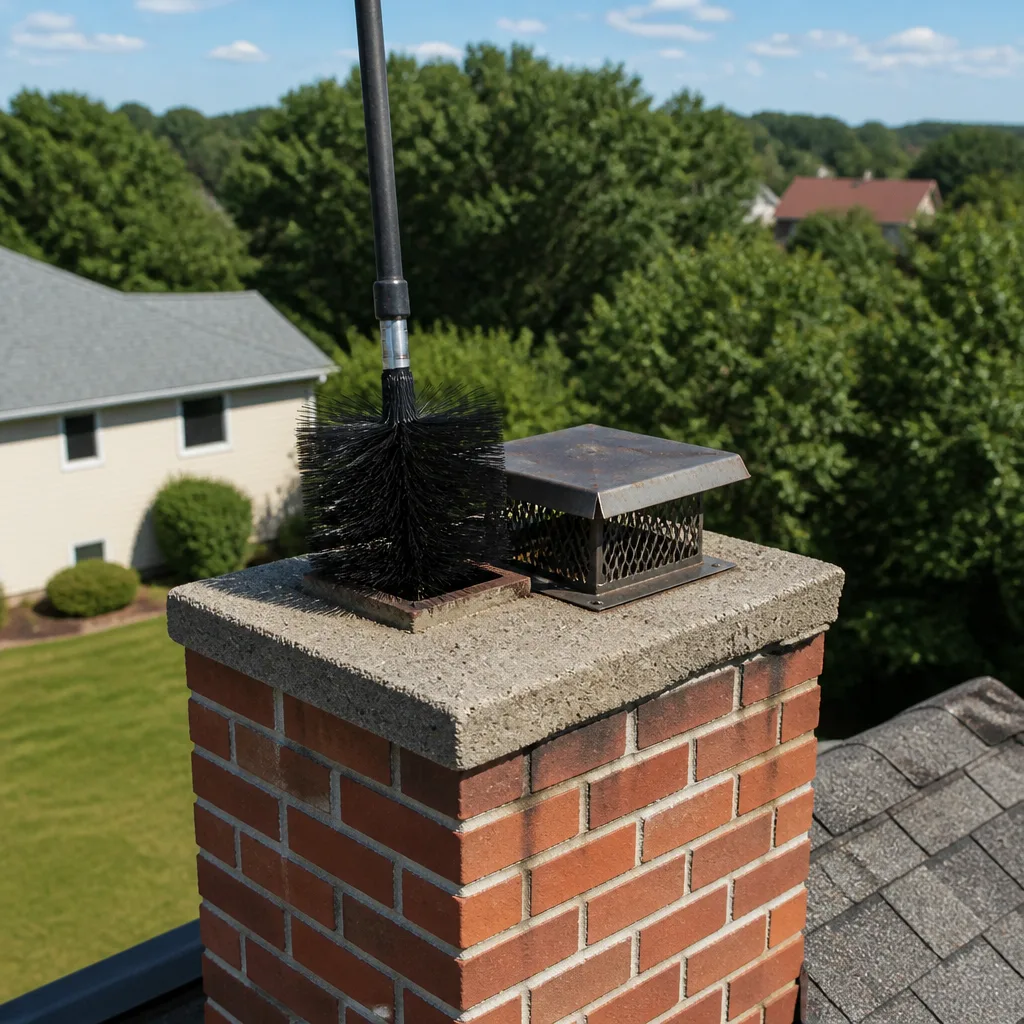
- Get the flue swept if the creosote load requires it. A chimney sweep is the baseline service. It removes creosote before it becomes fuel. It also gives the technician a look at every inch of the flue on the way up.
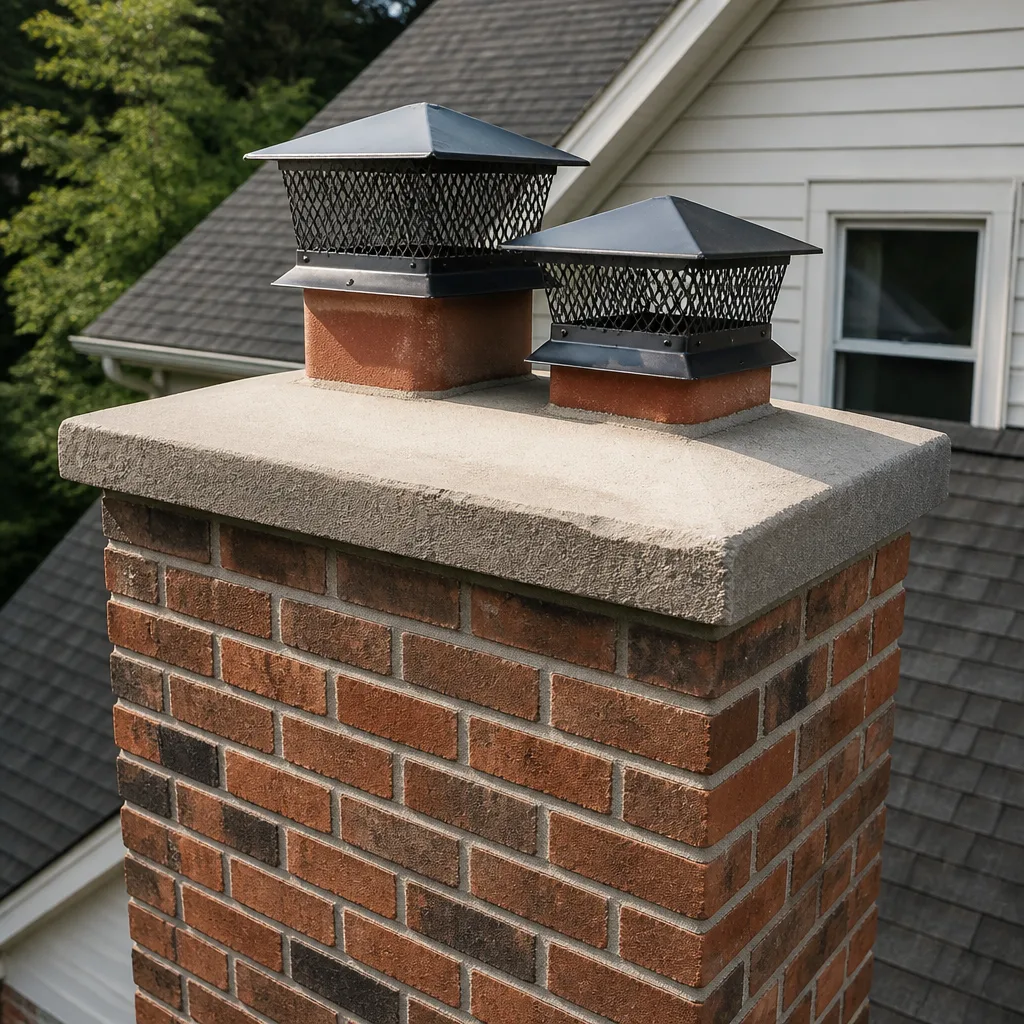
- Replace a missing or damaged cap. A cap keeps rain, birds, and debris out of the flue. Midtown’s older housing stock often has a bare flue tile at the top with nothing capping it. We install Gelco and Famco caps and covers as the standard solution because they’re built for the moisture exposure at the top of a chimney.
- Check the crown. The crown is the concrete cap at the top of the chimney around the flue. A cracked crown lets water into the masonry, which freezes and expands over a Midtown winter, or soaks into interior flues that feed the fireplace. chimney cap & crown work is the front line against moisture intrusion, and it’s cheaper than fixing the damage a failed crown causes.
- Test your damper. On a cold day, open and close the damper fully. It should move smoothly through its full range. A damper that’s stuck open or stuck closed is a fire safety problem, not a convenience problem.
- Verify your smoke and CO detectors work. One smoke alarm and one CO alarm on the same floor as the fireplace is a baseline. Test both, replace batteries, and make sure the CO alarm is rated for the response time you’d actually need.
- Write the four facts on a card. Flue type, liner material, last service date, fuel type. Keep it with your fire safety information.
The entire sequence above is a single call to a full-service chimney professional. It’s also the reason we do inspection first and repair recommendation second: the right materials for the repair are chosen from what the inspection actually finds, not from what’s on the truck.
We also see a specific Midtown pattern in older homes: a fireplace that was converted from wood to gas, with the original flue never updated. That conversion changes the CO risk profile dramatically. A gas fireplace vented through an oversized masonry flue can cool exhaust gases too quickly, and the gases can condense or back up. If your fireplace was converted at some point and you’re not sure the flue was relined for gas, that’s a priority inspection.
Common Mistakes to Avoid
- Waiting until you smell smoke to act. A chimney fire often produces no smoke in the room until it’s already compromised the flue. By the time you smell something, the response window has narrowed. Know the sounds and act on those.
- Using a fire extinguisher into the fireplace. A standard extinguisher aimed at the firebox won’t reach a chimney fire burning in the flue, and it can spray burning embers back into the room. Evacuate and call 911.
- Reopening the damper to “let the smoke out.” This is the classic mistake. A damper opened during a chimney fire feeds oxygen to the burn and raises flue temperature. Keep it closed as you leave.
- Skipping the Level 2 inspection after the fire. The fire being out is not the same as the system being safe. A camera inspection is the only way to know whether the flue liner survived.
- Burning unseasoned wood to save money. Wet wood produces far more creosote per cord than dry wood, and it puts the same dollars of creosote load back in the flue. In Midtown, where many homes buy by the truckload, ask about moisture content before the wood is dropped.
- Assuming a cap is optional. A missing cap is the single most common condition behind a water-damaged interior flue in older Midtown homes. Water in a masonry flue, then a freeze, then a crack – that sequence is cheap to prevent and expensive to fix.
- Treating a CO alarm as a false alarm. A CO alarm near the fireplace that goes off during a fire is telling you the flue is spilling. Evacuate and call. Don’t reset it and relight.
When to Call a Professional
Call a professional chimney service if you have any of the following: a suspected or confirmed chimney fire (Level 2 inspection required before relighting); a CO alarm activation while a fireplace or wood stove is running; a fireplace or stove that smokes into the room when lit; visible cracking or spalling inside the firebox; a missing chimney cap; a chimney with no liner or a rusted or damaged liner; a fireplace that hasn’t been serviced in several seasons; or a change in fuel type, such as converting from wood to gas. Each of these conditions relates directly to how the system will behave if something goes wrong. Chimney Sweep Midtown offers free estimates in Midtown – call (877) 820-8520. We answer 24/7. Fast dispatch from 7am to 7pm, Sunday through Friday.
See the difference
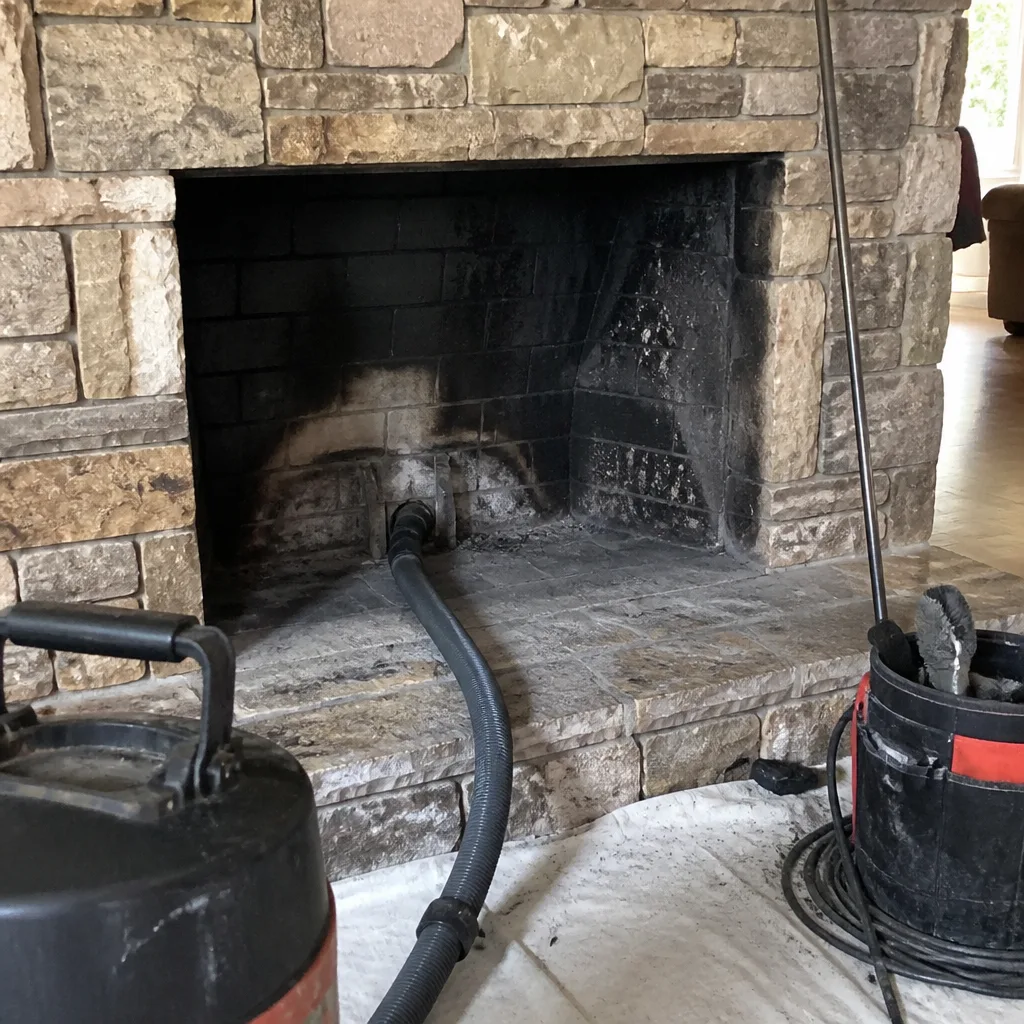 Before
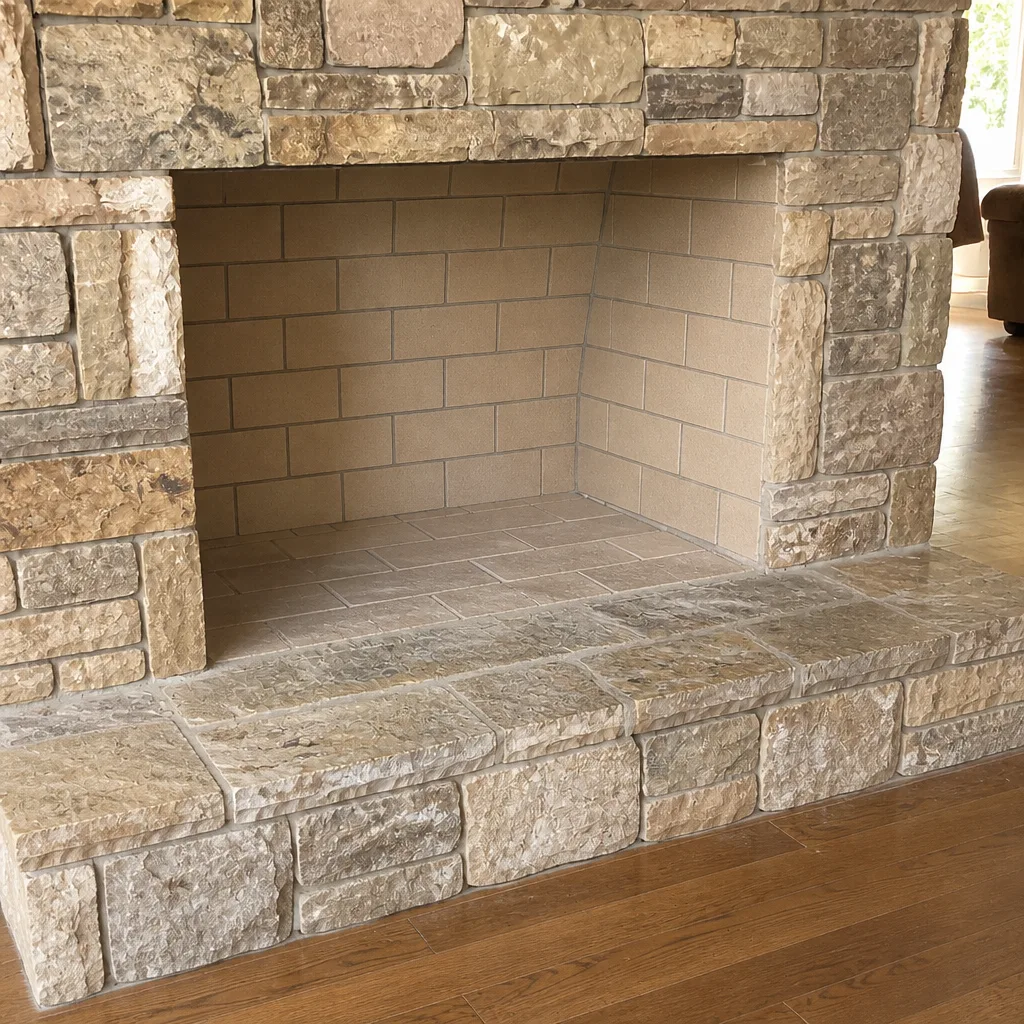 After
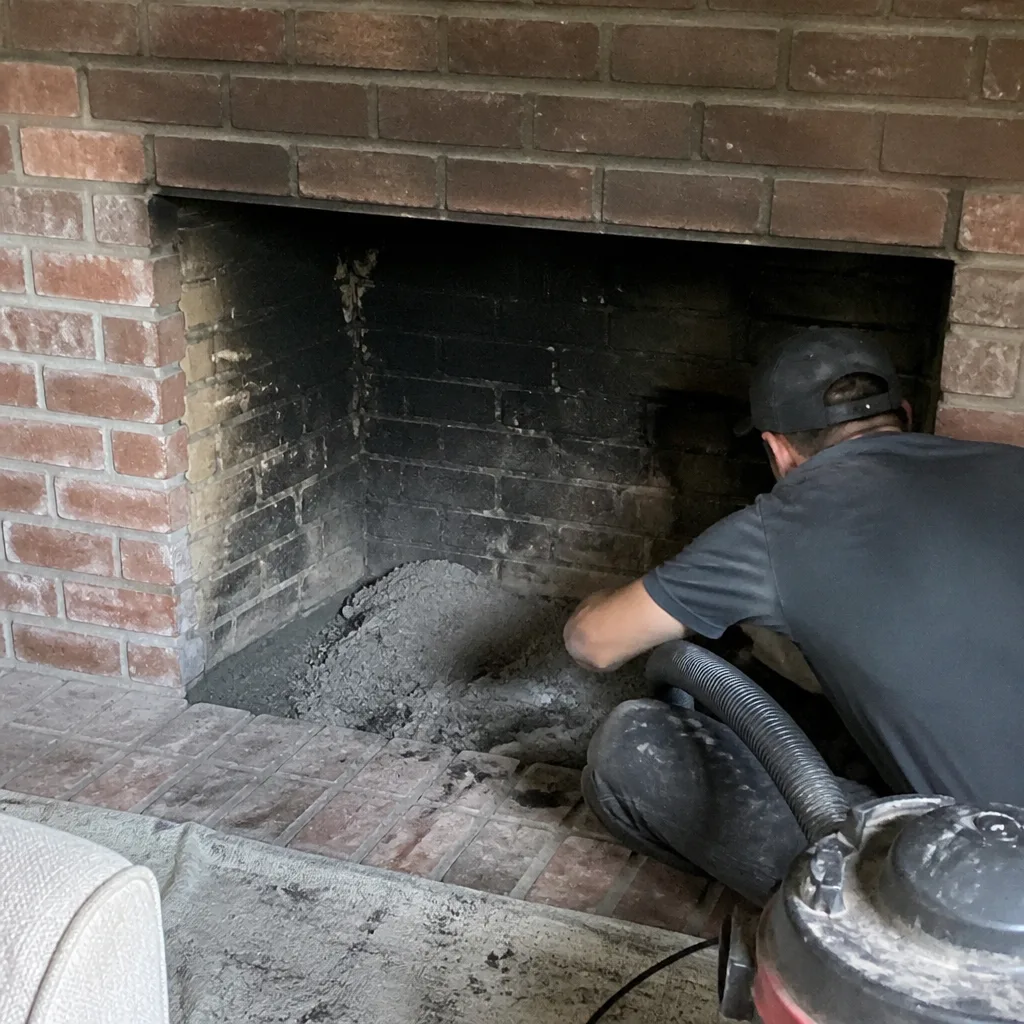 Before
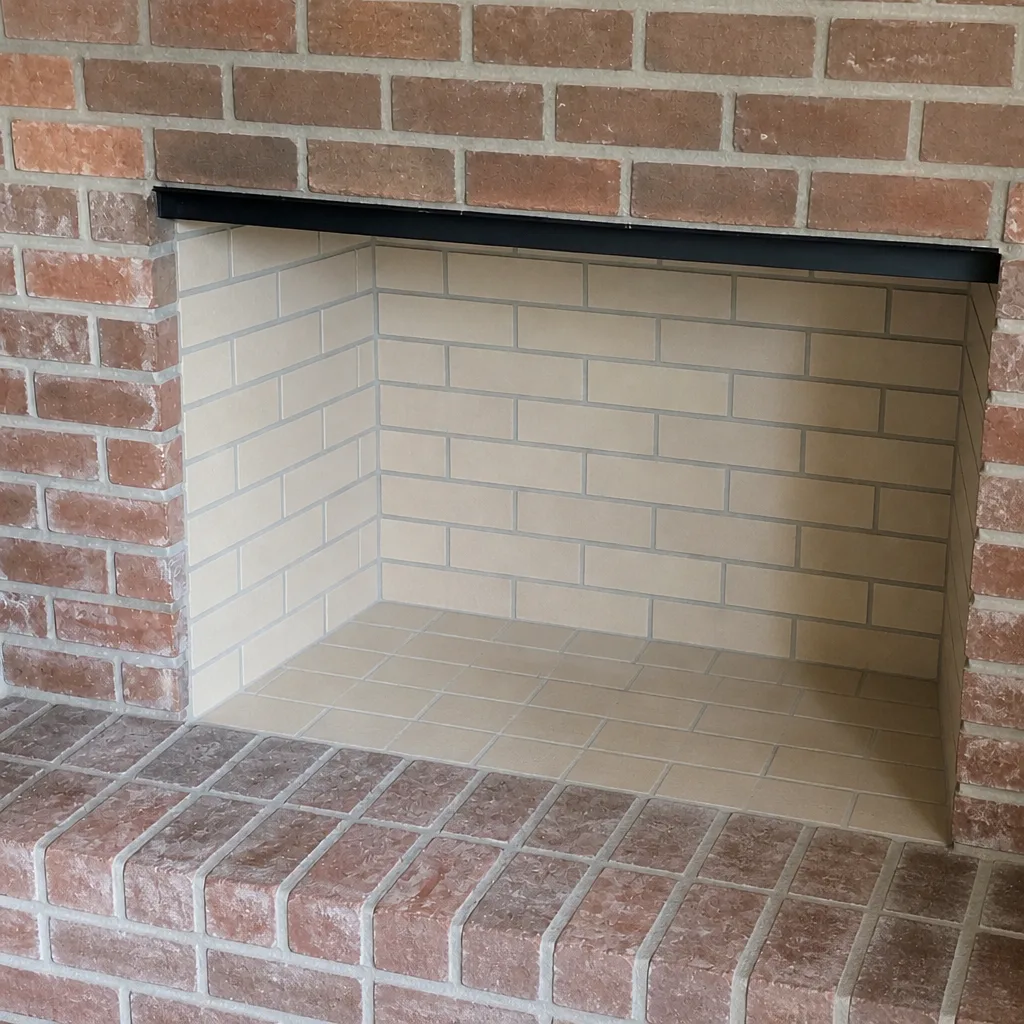 After
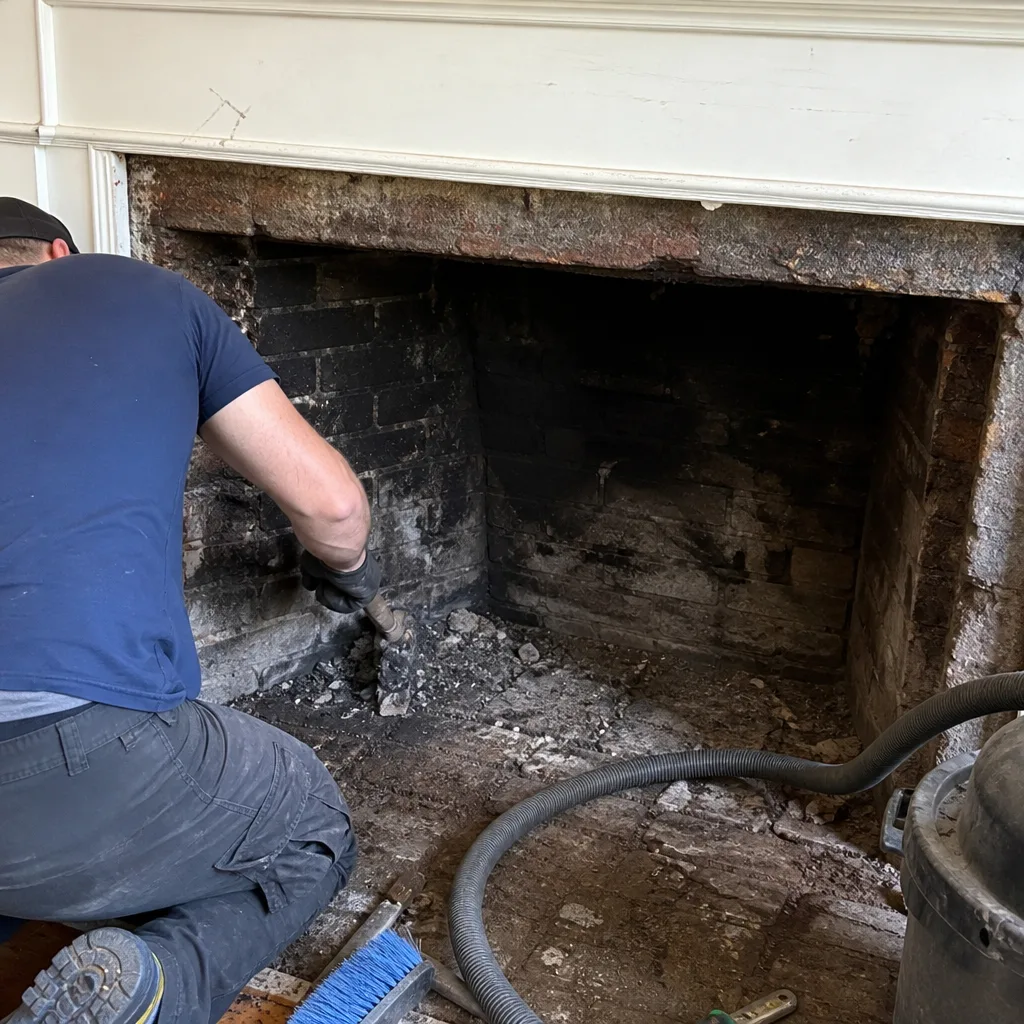 Before
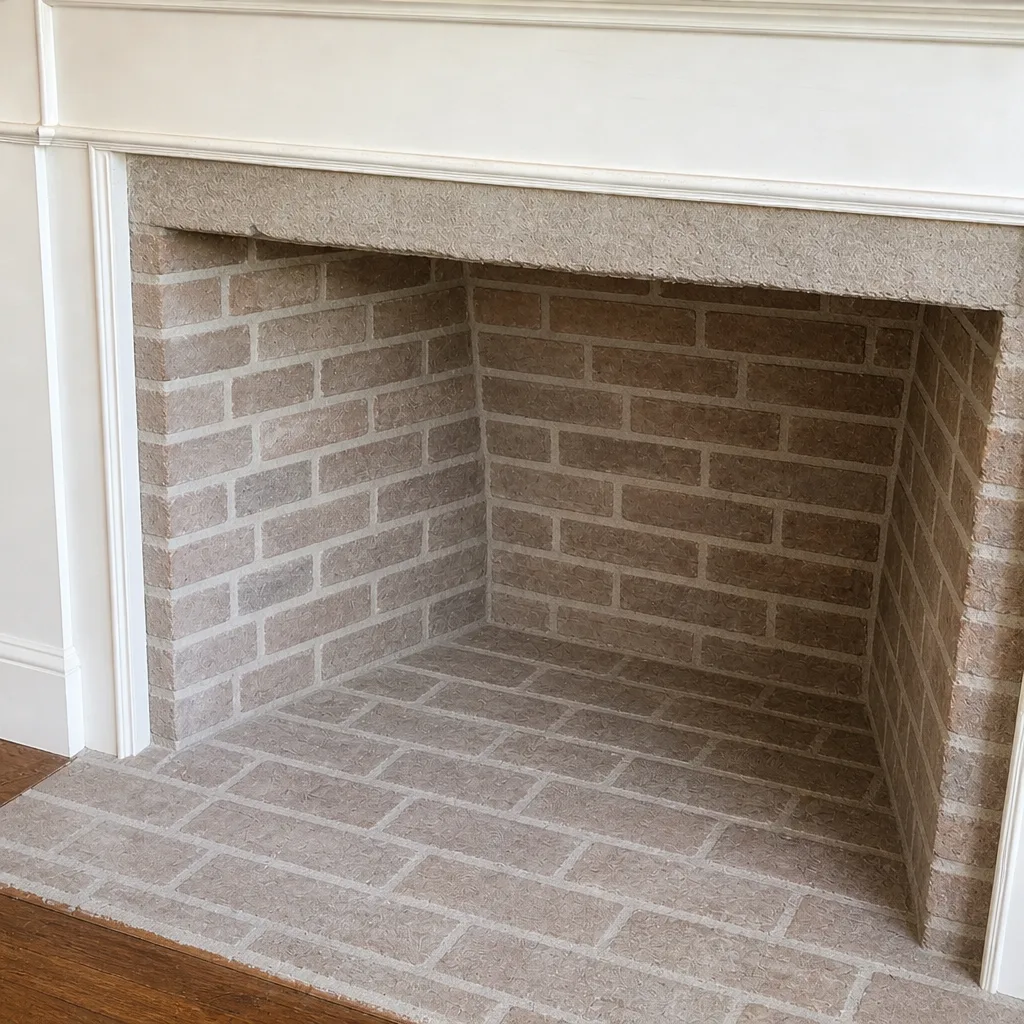 After
Frequently Asked Questions
Chimneys should be swept when a professional inspection indicates the creosote accumulation has reached a level that needs removal, typically once per year for a fireplace in regular use, and more often for heavy use or for wood that isn’t well seasoned. A sweep without an inspection is incomplete – the inspection is what tells you the condition of the flue, cap, crown, and damper. Call (877) 820-8520 for a free estimate.
Skipping the inspection means relighting into a flue you haven’t verified is intact. A chimney fire can crack flue tiles or open liner joints that look fine from the firebox, and a second fire through a damaged flue can allow heat and gases into the wall or living space. A Level 2 inspection with camera documentation is the only way to know the liner survived. Call (877) 820-8520 to schedule one – the estimate is free.
Not always. The inspection report will show whether the liner is intact. If the original clay tile is cracked in a limited area and the surrounding flue is sound, HeatShield ceramic resurfacing can restore the interior surface without a full reline. If the liner has failed structurally or is missing, a reline with a flexible system like DuraFlex is the correct repair. We document what we find before we recommend anything, so the recommendation is grounded in the camera report, not a sales conversation. Call (877) 820-8520 for an exact quote.
A correctly drafting chimney pulls smoke up and out with no spillage into the room on a cold start. If smoke drifts back into the firebox or the room when the fire is lit, or if you smell smoke in the room when the fireplace is operating, the flue is not drafting correctly. Common causes include a cold flue, a partially blocked flue, an undersized or oversized flue, and negative pressure from exhaust fans. An inspection identifies the specific cause. Call (877) 820-8520.
Yes, close the damper, but only after you’ve gotten everyone out of the house and called 911. Closing the damper restricts oxygen to the fire in the flue, reduces flue temperature, and helps limit the burn. Do not reopen it while the fire is active. Test your damper on a cold day, before the season, so you know it will close when it matters. Call (877) 820-8520 for a pre-season inspection.
Evacuate the house and call 911. A CO alarm that goes off while a fireplace or wood stove is operating is telling you the flue is spilling combustion gases into living space, typically from backdraft, a blocked flue, a cold flue, or a closed damper. Do not reset the alarm and continue using the fireplace. After the fire department clears the house, schedule a chimney inspection to identify the cause and correct it. Call (877) 820-8520 for a free estimate on any repair.
The Bottom Line
Chimney emergency preparedness is a pre-season job. The three facts that matter most – flue type, liner material, last service date, and fuel type – are things a professional inspection puts in your hand, on paper, before the season starts. Knowing what a chimney fire sounds like, closing the damper as you evacuate, and getting a Level 2 inspection before relighting are the three moves that determine the outcome. Everything else – caps, crowns, liner restoration with HeatShield, and DuraFlex relining – is prevention so an emergency has less to work with. We document what we find before we recommend anything. The right materials for the repair, not whatever’s on the truck.
When to Call Us
If your Midtown home needs an inspection, a sweep, a cap and crown replacement, a fireplace repair, or a full chimney repair after an event, call (877) 820-8520. From the firebox to the cap, we service the whole system. We answer 24/7. Fast dispatch from 7am to 7pm, Sunday through Friday. A chimney sweep is a starting point, not the whole job – call today for a free estimate and a written inspection of what your flue actually needs. fireplace repair and full chimney repair are resolved in-house, with no referral handoffs. Our technicians have up to 14 years of experience.
Written by the team at Chimney Sweep Midtown.